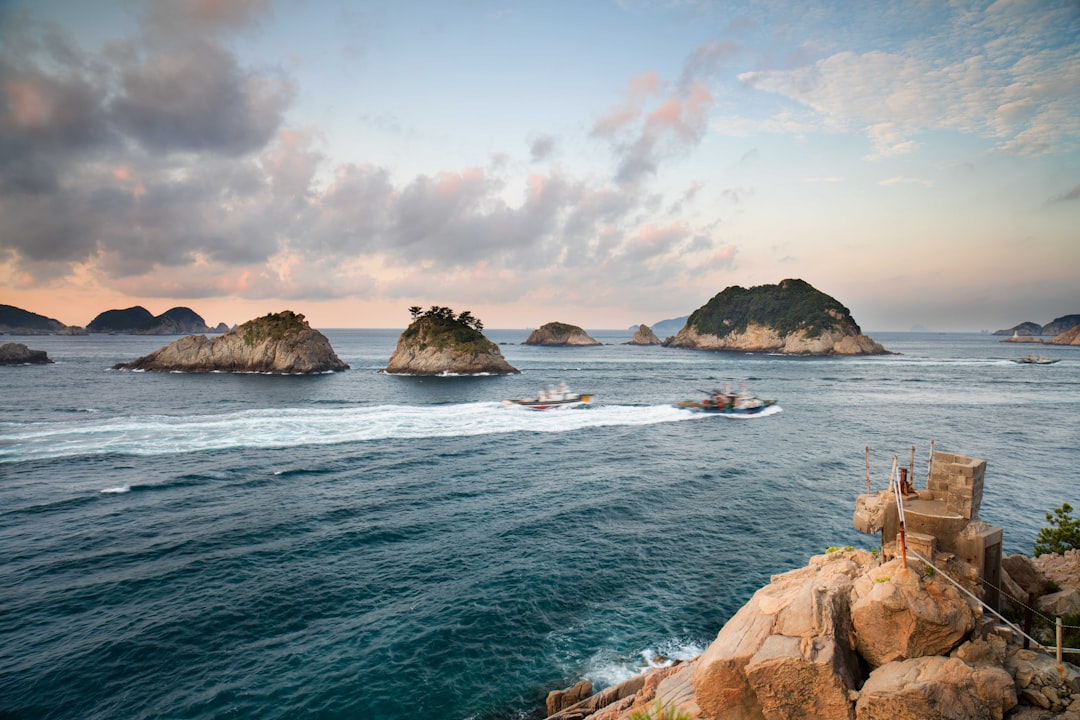
Why Geoje Island Actually Matters (and When It Doesn’t)
Geoje Island is one of those places that genuinely surprised me after years in Korea. It’s far enough from Seoul that you’ll escape the crowds, but close enough that it’s not a hassle. The beaches here aren’t party beaches—they’re proper, quiet stretches where you can actually hear yourself think. That said, it’s not Bali. If you’re coming for Instagram moments and nightlife, you’ll be disappointed. Come for the sculpture parks, incredible fresh seafood, and the chance to walk on actual empty sand.
Getting There
From Seoul
Most foreigners I know take the express bus from Seoul Express Bus Terminal (강남고속버스터미널). It’s line 1100 or 1200 heading to Geoje—about 4 hours 20 minutes depending on traffic, costs around 28,000-32,000 KRW. Early morning buses (6-7 AM) are usually less crowded. You’ll arrive at Geoje Intercity Bus Terminal in the city center.
There’s also a train option via Busan that people mention, but honestly, I’ve never bothered. The bus is more direct and cheaper than getting to Busan first.
Around the Island
This is where most guides mislead you. Geoje Island is sprawling—roughly 80 square kilometers. You cannot see everything in 3 days without a car. The buses exist, but they’re infrequent (every 30-50 minutes on main routes) and the schedule isn’t intuitive unless you read Korean. Rent a car if you can. If not, grab a taxi to the main spots and resign yourself to missing some places. When I first visited without a car, I wasted 3 hours waiting for buses and seeing almost nothing.
Car rental from the terminal: around 50,000-70,000 KRW per day depending on season. Parking is almost always free at attractions.
What to Do and See
Olle-gil Coastal Walking Trail
The Olle-gil is excellent—about 17 km of marked trails around the island’s edges. I usually did 4-5 km stretches rather than the full thing. Start early (6-7 AM) to avoid the midday sun and heat. The trail is well-marked with blue ribbons. Most sections have no entrance fee. The route passes through fishing villages where locals are actually working, not posing for photos.
Windy Hill (바람의 언덕)
This overlooks the shipping lanes and is legitimately nice—not crowded before 10 AM. There’s a small café here. Opening hours are essentially dawn to dusk, free entry. The view is cleaner in winter (less haze). I’ve seen this on other blogs described as “dramatic”—it’s not. It’s pleasant and quiet. Go for that reason, not for drama. 15 minutes maximum if you’re just passing through.
Geoje Pottery Village
Fine if you’re interested in ceramics (entrance free), but I found it underwhelming compared to other pottery areas in Korea. Most workshops close by 5 PM. Some are closed entirely on Mondays. Only worth 30-45 minutes. I skipped it on my last visit and didn’t regret it.
Sculpture Parks (The Real Attraction)
Geoje Archipelago Art Museum: This is genuinely worth the trip. Set on the coast with bronze sculptures scattered across the grounds. Entry is 10,000 KRW. Open 9 AM-6 PM (9 AM-5 PM November-February). Closed Mondays. Most people arrive 10 AM-2 PM—come at 8:45 AM if you want photos without crowds. Takes 1.5-2 hours to walk through properly. The café is overpriced (6,000 KRW for coffee) but the view is decent.
Mongdol Park (몽돌해변): Rocky beach with smaller sculptures. Free entry. This one I actually prefer to the bigger museum because it’s less “art installation” and more “stuff on a real beach.” You can walk for ages along the rocks. Gets busy after noon on weekends.
Turtle Island (거북선 테마공원)
A quirky war museum disguised as a theme park. 8,000 KRW entry, open 9 AM-6 PM. It’s exactly as dated as it sounds. Skip it unless you’re really into Korean naval history or you have kids who need a break. I went once out of curiosity and felt like I’d wasted time.
Beaches
Hakdong Beach is probably the best swimming beach on the island. Clean water, lifeguards in summer, relatively uncrowded. Free entry. June-August gets busy on weekends, but even then it’s nothing like Korean beaches near Seoul.
Moonlight Beach (달빛해변) is smaller and quieter. Best at sunset. No facilities, so bring what you need.
Where to Eat and Practical Tips
Seafood (The Main Reason to Eat Here)
Raw fish and sashimi: Go to any restaurant near the fishing port in downtown Geoje. Ask locals where they eat. I had an incredible dinner for 35,000 KRW per person at a place with no English name—just walked in where the fishing boats were. The quality is incomparable to Seoul restaurants charging triple the price.
Specific recommendation: If you find Sung-il (성일회), order the jjim (steamed fish stew). It’s around 25,000-30,000 KRW. No reservations, cash preferred.
Sea urchin (uni): In season (April-May, September-October), it’s cheap and fresh. Expect to pay 15,000-20,000 KRW for a good portion. Off-season, skip it.
Non-Seafood Options
Geoje isn’t a foodie destination beyond seafood. Convenience store kimbap is your friend. Most restaurants close by 8-9 PM and many are closed Mondays or Tuesdays.
Practical Things Nobody Mentions
Bring sunscreen. The sun reflects off the water and rocks and you’ll burn badly. Wear proper shoes for the rocky beaches—flip-flops don’t work. The island has minimal WiFi in rural areas; get a local SIM if you’re staying multiple days. There’s a CGV cinema in the downtown area if weather turns bad. Water is safe to drink from taps everywhere. ATMs are easy to find in the town center but sparse elsewhere—withdraw cash early.
Honest Take
Go to Geoje if you want a genuinely quiet coastal break and you appreciate sculpture, walking, and eating well. Skip it if you need nightlife, shopping, or constant activity. The ideal visit is 2-3 days with a car. If you can’t drive or rent a car, reduce expectations—you’ll see maybe 40% of what the island offers. Best time is May or October when the weather is perfect and the crowds are manageable. Avoid August (humid, crowded, expensive) and January-February (cold, windy, many places closed). One thing I wish I’d known: the Olle-gil coastal trail is better than any single destination on the island. Spend more time walking it, less time chasing every attraction.