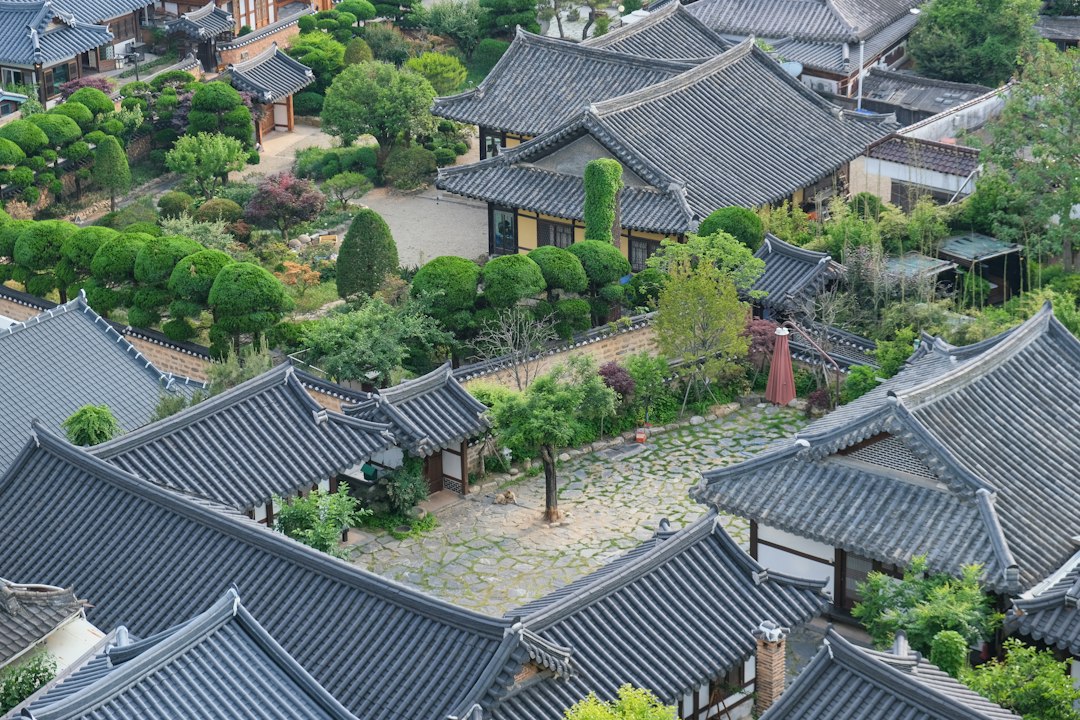
Why You Should Actually Go (But Maybe Not How You Think)
Look, everyone goes to Jeonju for the Hanok Village. I get it. But after three visits, I can tell you that the village is overrun with tourists, overpriced, and honestly kind of a theme park now. What actually makes Jeonju worth the trip is everything around it—the neighborhoods where locals actually live, the street food that tastes nothing like what you’ll find in Seoul, and the cafes tucked into second-floor apartments that you’d walk past without noticing. If you’re expecting some zen-like journey through tradition, you’ll be disappointed. If you want real food, weird galleries, and the kind of local energy that Seoul erased ten years ago, this is your place.
Getting There
From Seoul, you’ve got two options. The KTX train from Seoul Station takes about 3 hours and costs 28,900 KRW one-way. The express bus from Seoul Express Bus Terminal (Gangnam, Gangbyeon, or Dong-Seoul stations) runs hourly, takes 2.5 to 3 hours depending on traffic, and costs around 18,000-22,000 KRW. Most people do the bus because it’s cheaper, but honestly, the KTX is worth the extra 6,000 won if you want to actually arrive not feeling like you’ve been through a car compactor.
Once you’re at Jeonju Station, don’t make the mistake I did the first time: thinking the Hanok Village is a 10-minute walk. It’s not. Take the local bus (100, 101, or 102) directly there if that’s your first stop—costs 1,250 KRW. Or grab a taxi for about 8,000 KRW if you have luggage. The thing most guides get wrong? They tell you Jeonju is small and walkable. It’s not. The actual city sprawls, and while the main attractions cluster together, you’ll waste hours wandering if you assume you can just walk between neighborhoods.
What to Do and See
Skip Most of Hanok Village (Yeah, Really)
I’ll keep this short because I know you’ll go anyway. The main thoroughfare is packed from 10 AM onwards. If you do go, arrive by 7:30 AM or after 5 PM. Entry is free, but almost nothing is cheap once you’re inside. The village itself is stunning architecturally, but 80% of the buildings are now cafes, restaurants, and shops selling overpriced “traditional” crafts made in China. I’d give it one hour maximum, then get out.
Gyeonggi-do Craft Museum (Worth Your Time)
This is in the Hanok Village area, but separate. It’s 3,000 KRW entry, open 10 AM to 6 PM (closed Mondays), and actually showcases functional traditional crafts—not tourist trinkets. The building itself is a restored hanok. I spent about 45 minutes here and learned more about Korean woodworking than I had in my entire time living here. It’s quiet, even on weekends. Go after lunch when people are eating.
Jeonju National Museum
Located about 15 minutes’ walk from the village (or take bus 100), admission is 4,000 KRW. Hours are 10 AM to 6 PM (closed Mondays). The collection is solid—ceramics, sculptures, Buddhist artifacts—but it’s honestly a “if you have time” spot. Crowd levels are low year-round. The real reason to go? It’s in a newer building with good air conditioning and you get a break from walking.
Omokdae Park and Surroundings
Free, always open. This is where locals actually hang out. It’s on a hill overlooking the city, with walking paths, old-school covered pavilions, and zero tourist infrastructure. The view isn’t Instagram-perfect, but it’s real. Take the bus to stop near Omokdae and just wander. You’ll find small restaurants, old residential neighborhoods, and a pace that feels like Korea from 15 years ago.
Jeonju Bibimbap Museum
1,000 KRW entry, 10 AM to 6 PM daily. This is quirky and silly, but I actually found it entertaining. It’s basically the history of bibimbap as a concept, with some interactive elements. Takes 30 minutes max. Nearby there’s a whole street of bibimbap restaurants—more on that below. This museum is tourist bait, but harmless tourist bait.
Where to Eat and Street Food
Jeonju’s Actual Food (Not the Tourist Version)
Forget the Hanok Village restaurants. Head to the area around Jeonju Station or the neighborhood called Wansan-gu. On Bibimbap Street (bibimbap-geori), you’ll find dozens of restaurants, many run by the same families for decades. Most meals run 8,000-12,000 KRW. The bibimbap here uses vegetables you won’t recognize, stone-ground sesame oil, and rice cooked specifically for it. It’s different from Seoul versions. Go for lunch between 11:30 AM and 1 PM or you’ll wait.
Street Food Markets
Jeonju Nambu Market is a real working market, not a tourist market. Open mornings and afternoons, it sprawls across several blocks. You’ll find tteokbokki (2,000-3,000 KRW per serving), bindaetteok (Korean pancakes, 3,000 KRW), and hodugwaja (red bean pastries, 1,500 KRW each). This is where locals buy groceries and eat. Arrive around 11 AM for the best selection. There’s also Jeonju Pungnamun Market, which is similar—both are worth exploring for 45 minutes or so.
Cafe Culture (The Real Reason to Come)
This is where Jeonju actually surprised me. There’s a cafe obsession here that rivals Seoul, but they’re cheaper and often run by people who actually care about coffee. Expect to pay 5,000-7,000 KRW for specialty drinks versus 8,000+ in Seoul. Cafes cluster around several neighborhoods—look for areas with older apartment buildings and narrow alleys. Most don’t have English menus or signs. You’ll find them by accident, which is kind of the point. Spend an afternoon just walking and discovering.
Honest Take
Go to Jeonju if you want to see what Korea looked like before everything became a franchise or a tourist destination, but understand you’re not getting a “hidden gem”—you’re getting a mid-sized Korean city that hasn’t fully succumbed to the Seoul treatment. Skip it if you have limited time in Korea and want maximum Instagram moments; you’ll spend half your time frustrated in crowds. The best time to visit is April-May or September-October—weather is perfect and it’s less packed than summer or holidays. One thing I wish I’d known: bring cash. Lots of cafes and small restaurants are still cash-only, and while ATMs exist, they’re annoying to find. Also, book accommodation outside the Hanok Village. Hotels there are triple the price of equivalent places 10 minutes away and you don’t need to stay in that area.