Why Bother Coming Here?
Jinju isn’t flashy. It won’t blow your mind. But if you want to actually understand Korean history without fighting crowds in Seoul, and you like walking along a river with decent local food, it’s worth a weekend trip. I’ve been here four times now—twice for the fortress, once for the festival, and once just to eat and wander around. It’s the kind of place that grows on you, unlike some tourist spots that disappoint the second time.
Getting There
From Seoul, take the KTX (Korea Train Express) from Seoul Station to Jinju Station. Journey takes about 3 hours 40 minutes. A standard reserved seat costs around 53,000 KRW. You’ll arrive at Jinju Station, which is actually outside the city center—annoying but standard here. Buses run every 10-15 minutes from the station to downtown (the intercity bus terminal area). Local buses cost 1,250 KRW for a single ride. A taxi from the station to downtown Jinju runs about 15,000-18,000 KRW depending on traffic.
Most guides don’t mention this: the area around Jinju Station is genuinely nothing. Don’t wander around there expecting shops or food. Head straight into town. I made this mistake on my first visit and wasted an hour looking for a coffee shop that didn’t exist.
Alternatively, you can take an express bus from Seoul’s Gangnam or Nambu terminals (around 15,000-18,000 KRW, takes 4.5-5 hours). The KTX is faster and more comfortable if you can afford it.
What to Do / See
Jinju Fortress (진주성)
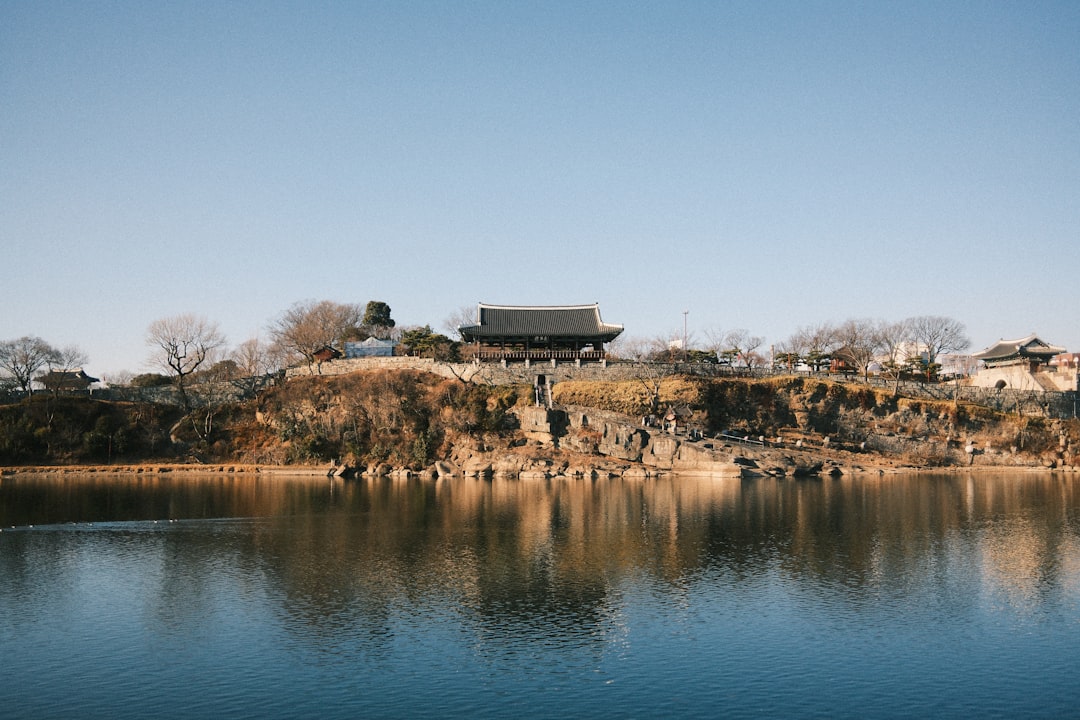
This is the main reason to come here. It’s a genuinely significant place in Korean history—the 1592 siege during the Japanese invasion (Imjin War) happened here, and thousands of people died. The fortress walls are well-maintained, the views over the Nakdong River are solid, and you can walk the perimeter in about 45 minutes at a relaxed pace.
Entry fee is 3,000 KRW. Opens at 9 AM, closes at 6 PM (winter 5 PM). Bring comfortable shoes—the stone paths are uneven and can be slippery when wet. Go early, around 9:30 AM, if you want peace and quiet. By 11 AM on weekends, it fills up with school groups and tourists. I went on a Tuesday morning last year and had the walls almost to myself for two hours.
There’s a small museum inside the fortress that’s… fine. Not terrible, but not amazing either. Definitely skip it if you’re short on time. The outdoor walk is where the value is. In my honest opinion, the fortress itself is more interesting than the exhibits.
Nakdong River Walk
After the fortress, walk down to the riverside. There’s a pleasant walking path that runs along the water, with restaurants, cafes, and cheap street vendor stalls. It’s nothing exotic, but it’s a genuinely nice way to spend an hour or two. The path connects to the fortress area, so it’s easy to combine both.
Where to Eat / Practical Tips
Food Worth Actually Going for
Jinju is known for two things: yukhoe (Korean beef tartare) and miyeok guk (seaweed soup). The yukhoe isn’t unique to Jinju, but locals take it seriously here. There’s a whole street of yukhoe restaurants near the fortress. My recommendation: Seo-won (서원). It’s not fancy, just straightforward, good yukhoe with proper beef quality. A full meal for two runs about 30,000-40,000 KRW. Go for lunch before 1 PM if you don’t want to wait.
For something more casual, find the street vendor area near the river selling hodugwaja (walnut-shaped pastries filled with red bean) for 1,000-2,000 KRW each. Not gourmet, but honest and satisfying.
There are multiple coffee shops lining the riverside, all acceptable. Expect 4,500-6,000 KRW for coffee. Nothing special, but fine for sitting and decompressing for 30 minutes.
Practical Stuff Locals Know
Jinju has a convenience store culture like everywhere else in Korea. GS25 and CU are everywhere, so don’t worry about water or snacks. ATMs are fine. English signage is limited compared to Seoul, but not non-existent.
If you’re staying overnight (which I’d recommend), budget guesthouses and small hotels run 50,000-80,000 KRW per night for basic but clean rooms. Nothing fancy. I’ve stayed at a place called “Riverside Hotel” twice, and it’s fine for the price. Nothing to write home about, but it’s clean and the owner is patient with broken Korean.
Public restrooms are available at the fortress and along the riverside. Korean public restrooms are generally pretty good compared to other countries, so don’t stress about this.
Honest Take
Go to Jinju if you’re already in South Gyeongsang Province or if you want a quieter historical experience without the Seoul crowds and prices. The fortress is legitimate, the river is relaxing, and the food is better than you’d expect for a medium-sized city. Don’t go if you need constant entertainment or nightlife—Jinju is genuinely a place where things close down by 9 PM. Skip the museum, spend your time on the walls and riverfront instead. Best time to visit is October through November when weather is stable and the light is good for walking around. Spring (April-May) works too but can be unpredictable with rain. I wish I’d known on my first visit to just ignore the station area entirely and go straight downtown—would’ve saved me an hour of confused wandering. If you’re spending 2 days here, do the fortress and riverside on day one, eat well on day two, and honestly consider just relaxing instead of trying to cram in more activities. Jinju rewards a slower pace.