Getting to Suwon and Settling In
Transportation from Seoul
Suwon sits just 50 kilometers south of Seoul, making it an easy day trip or overnight destination. The fastest way is taking the Seoul Metro Line 1 directly to Suwon Station (about 1 hour, 4,250 KRW). Alternatively, grab a taxi from Seoul for around 60,000-80,000 KRW if you’re traveling with others and want to split costs. KTX trains also run to Suwon (40 minutes, 9,100 KRW) but are overkill for this distance and leave less frequently than regular subway trains.
Once at Suwon Station, your hotel is likely within walking distance or a short taxi ride (5,000-8,000 KRW). The city is navigable, though not as intuitive as Seoul. Download Naver Map or Kakao Map—both work better than Google Maps here and show real-time subway and bus information.
Where to Stay
Budget hotels cluster near Suwon Station and Paldalmun (Paldal Gate). Expect 60,000-90,000 KRW per night for basic but clean rooms. Mid-range options like Suwon Ciel Hotel run 120,000-150,000 KRW. Honestly, Suwon isn’t a destination that justifies splurging on accommodation—you’re here for the fortress and food, not the hotel room. Many visitors actually day-trip from Seoul, which is entirely feasible.
Hwaseong Fortress: What to Expect
Visiting the Fortress
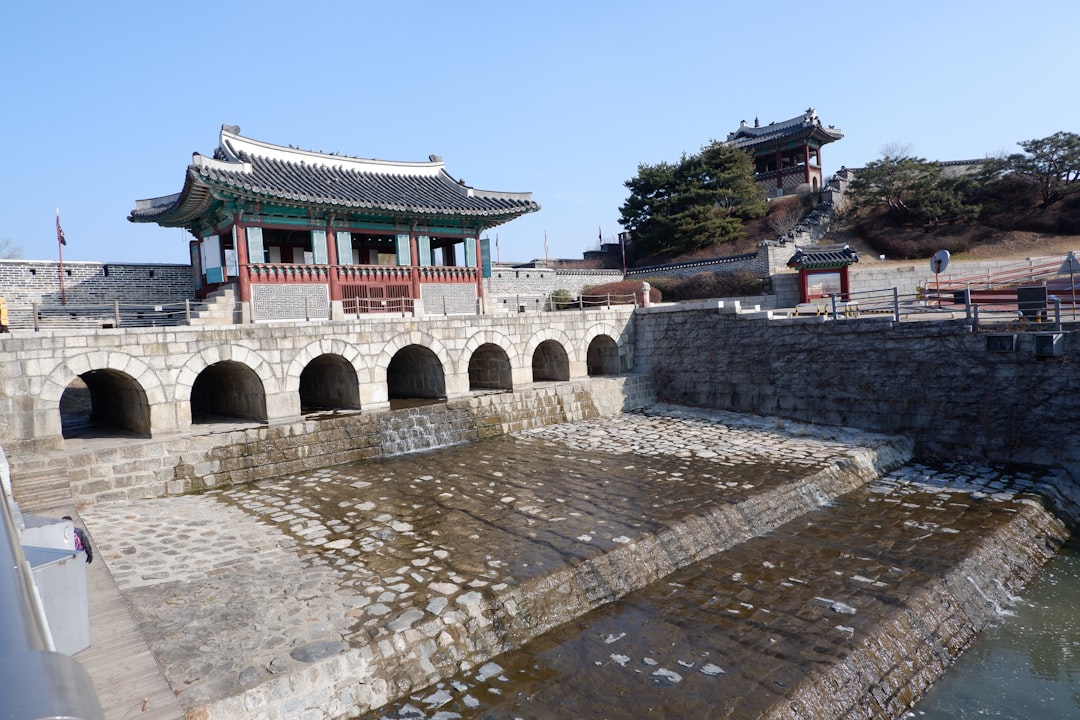
Hwaseong Fortress is your main reason for visiting Suwon. Built in 1794 by King Jeongjo, this UNESCO World Heritage site stretches 5.74 kilometers and features gates, watchtowers, and walls that showcase 18th-century military engineering. The fortress is mostly free to explore—you pay admission only if entering specific structures.
Opening hours are 9 AM to 6 PM (until 5 PM from November to February). General fortress grounds access is free. However, the Hwaseong Haenggung Palace (temporary royal residence within the fortress) costs 2,500 KRW to enter, and climbing Paldalmun Gate (South Gate) costs 2,000 KRW. The East Gate offers similar views for the same price.
How to Navigate the Fortress
Start at Paldalmun Gate, the most photogenic entrance. From Suwon Station, take Bus 11 or 13 (1,450 KRW) directly to the gate—roughly 20 minutes depending on traffic. The full walking loop takes 3-4 hours if you move steadily. Most visitors tackle sections rather than the entire circuit: the southern portion from Paldalmun to the East Gate is most crowded but most rewarding for photos.
Climb one of the gates for 360-degree views of Suwon’s mix of modern apartment blocks and older neighborhoods. It’s a modest climb (maybe 80-100 steps), but the views justify the entry fee. Bring water and sunscreen—there’s minimal shade along the walls, and the concrete reflects significant heat, even on cool days.
An honest note: Hwaseong isn’t Instagram-perfect at every angle. You’ll see power lines, modern buildings beyond the walls, and sections under maintenance. Spring and autumn offer the best light and weather. Summer is hot and humid; winter is bearable but the grounds feel emptier, which some prefer.
Markets and Local Food Exploration
Paldalmun Market
Located near Paldalmun Gate, this traditional market operates daily and sells everything from fresh produce to street food. The market is older and less tourist-focused than Seoul’s Myeongdong, which actually works in your favor—prices are lower and the crowd is mostly locals doing shopping rather than tourists hunting Instagram photos.
Grab tteokbokki (spicy rice cakes) from a stall for 5,000-7,000 KRW, or try gimbap (seaweed rice rolls) for 3,500-5,000 KRW. Hotteok (sweet pancakes) are 3,000-4,000 KRW and warm you up on cold days. The market also sells fresh fish, dried goods, and Korean snacks to take back to your hotel or to Seoul. Shopping here requires some Korean or pointing, but vendors are patient with foreigners.
Yeonpo Market
This second traditional market is smaller and grittier than Paldalmun, but prices are even better if you’re patient about navigating the chaos. You’ll find seafood, fermented goods, and basic groceries. It’s less oriented toward visitors, so expect fewer English signs, but that’s also why it’s more authentic and cheaper. Yeonpo is about a 15-minute walk from Paldalmun Gate or accessible by local bus.
Korean BBQ and Dining Scene
Korean BBQ Restaurants
Suwon is famous for galbi (beef short ribs) and dakgangjeung (sweet soy braised chicken). Many restaurants cluster near the fortress and around Suwon Station. For galbi, expect 25,000-35,000 KRW per 100 grams. A typical serving for one person runs 35,000-50,000 KRW before drinks.
Try Galbijip near Paldalmun Gate (open 11 AM-10 PM, no English menu but staff are accustomed to foreigners). Alternatively, head to restaurants in the building directly across from Suwon Station’s main exit—several BBQ spots operate there, and signage is clearer. Arrive before 6 PM to avoid waits, or expect queues on weekends.
Most Korean BBQ venues provide table-top grills. Meat arrives raw; you cook it yourself, which extends the meal but makes it interactive. Banchan (side dishes) are unlimited and refillable—vegetables, kimchi, sauces, and rice come with your order. One honest point: Korean BBQ is a social meal. Dining solo at a grill table feels slightly awkward, though restaurants will accommodate you.
Other Dining Options
Beyond BBQ, sample dakgangjeung at specialty restaurants for 12,000-18,000 KRW per serving. It’s chicken simmered in soy sauce, sweet rice wine, and garlic—comfort food, not fancy. Sujebi (handmade flour soup) runs 8,000-10,000 KRW and is perfect for lunch on a cold day. Ramyeon (instant ramen) shops serve basic meals for 5,000-8,000 KRW if you’re on a budget or hungry late at night.
Convenience stores (GS25, CU, Emart24) are everywhere and sell ready-made meals, snacks, and drinks. Prices are 5,000-10,000 KRW. They’re reliably clean and safe—never a bad backup plan if you’re tired or can’t navigate restaurant hunting.
Practical Tips and Timing
Day-by-Day Itinerary
Day 1: Arrive in Suwon by mid-morning via subway from Seoul. Check into your hotel, grab lunch at Paldalmun Market, then spend the afternoon walking the southern fortress section from Paldalmun to the East Gate. Return for dinner at a galbi restaurant near the fortress. Total fortress time: 3-4 hours.
Day 2: Visit Hwaseong Haenggung Palace (1-2 hours), explore other fortress sections or revisit favorite spots, browse Yeonpo Market, then enjoy a final meal before returning to Seoul. If departing early, skip Day 2 exploration and just enjoy one last food-focused morning before heading back.