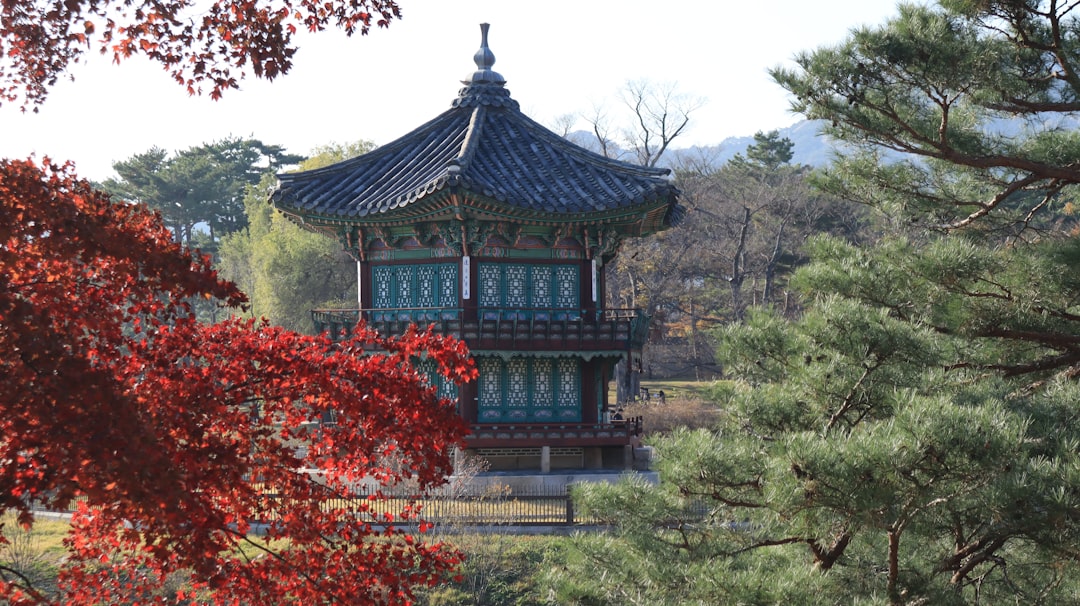
Opening
Spring in Korea is legitimately worth the trip, mainly because of the cherry blossoms and the food. The timing is tight — usually mid-March to early April for peak bloom — but when it works, it’s genuinely beautiful. I’m not talking about Instagram-filter beautiful. I mean you’ll actually see Korean families picnicking under trees, drinking soju, and acting like normal people instead of tourists. That said, if you hate crowds, come early April and accept that you’ll still be sharing everything with about 50,000 other people.
Getting There
Most of the main spring spots are accessible from Seoul within 1-2 hours, which is the main reason to visit during this season. For Yeouido (the most famous cherry blossom location in Seoul itself), take Line 5 or Line 9 to Yeouido Station. It’s free to walk around, and the station sits right in the middle of the park. It takes literally 20 minutes from central Seoul.
If you want to go to Jinhae — and you should, because the blossoms are denser there — take the KTX from Seoul Station. The train costs about 30,000-40,000 KRW depending on which train you catch, and it takes roughly 2 hours. From Jinhae Station, local buses (around 1,250 KRW) or a taxi (about 10,000-15,000 KRW) gets you to Gyeongpo Lake, which is the main viewing area. Here’s what most guides miss: the KTX schedules get slammed during peak blossom week. Book at least 3-4 days in advance, or you’ll be standing the whole way.
For temple visits like Hwagyesa in Seoul, take the subway to Anguk Station on Line 3, then a taxi for about 5 minutes (4,000-6,000 KRW). Entry is free, but donations are encouraged — throw in 2,000-5,000 KRW if you want.
What to Do / See
Yeouido Park, Seoul
This is the main event. Over 1,800 cherry trees line the paths, and yeah, it’s packed. But go early. Seriously. I showed up at 7 AM on a Saturday in late March and had almost the entire park to myself for ninety minutes. By 10 AM, it was a complete human traffic jam.
The park is open year-round and free. Peak bloom is usually between March 25 and April 5, though it shifts based on weather. The actual bloom lasts about 5-7 days per year, so you’re rolling the dice somewhat. During the peak week, the park hosts “Cherry Blossom Festival” events with food stalls and performances, which honestly are overcrowded and mediocre. Skip them. Just walk the paths yourself.
Bring a picnic blanket. Genuinely. Get kimbap and a bottle of makgeolli from a convenience store and sit on a bench. Watch families do the same. That’s the actual experience.
Jinhae, Gyeongpo Lake
About 40 km south of Seoul, Jinhae has better blossoms than Yeouido because the density is higher and it feels less like a tourist stampede. Gyeongpo Lake is the main area, and there’s a 3.5 km walking trail around the water. Entry is free. The lake is surrounded by cherry trees, and unlike Yeouido, you can actually walk without feeling like you’re in a crowd crush.
Go midweek if possible. Weekends are slammed. The blossoms usually hit peak around 3-5 days after Seoul’s peak, so if Yeouido looks past its best, Jinhae might still be good. I visited on a Thursday in late March and maybe saw 200 people total across the entire 3.5 km walk. Ideal.
Hwagyesa Temple, Seoul
This temple has old magnolia trees that bloom around the same time as the cherry blossoms. It’s less crowded than the parks because fewer tourists know about it. It’s a functioning temple, so be respectful — no loud talking, no sitting on sacred areas.
Open daily, free entry. Takes about 40 minutes to explore the main grounds. The magnolia trees are genuinely stunning, and the temple itself is from the 1600s, which is interesting if you care about that. Honestly? It was beautiful but felt more like a bonus activity than a main destination. Go if you’re nearby, but don’t plan your whole trip around it.
Spring Temple Gardens — Sudeoksa, Chungcheong Province
This one’s a day trip, about 2 hours south of Seoul by train (KTX to Cheonan, then local bus). Entry is 8,000 KRW. The temple is surrounded by plum blossoms (which bloom slightly earlier than cherry blossoms, usually late February to early March) and has a better maintained garden than most temples in Seoul.
Here’s the honest part: it’s beautiful, but it’s also a bit of a trek. If you only have 2-3 days in Korea, skip it. If you have a week and you actually like temples and gardens, it’s worth the train ride.
Where to Eat / Practical Tips
Spring Foods to Try
Spring in Korea means specific seasonal foods that are actually part of the experience. Try jjuk (rice porridge) made with mugwort (ssuk jjuk) — it’s bright green and tastes earthy. You’ll see it in restaurants near parks and temples. Around 8,000-12,000 KRW.
Chwiburger (fried wild greens) are sold at street stalls everywhere during spring. They’re crispy, salty, and cost about 3,000 KRW. Actually good, not just touristy. I eat these every spring.
Makgeolli and beers pair perfectly with picnics. A bottle of makgeolli from GS25 is about 3,500-4,500 KRW. It’s cold, slightly sweet, and everyone’s drinking it under the blossoms, so you might as well join.
Where to Eat Near the Parks
Skip the festival food stalls — they’re overpriced and mediocre. Instead, walk 5 minutes from Yeouido Park to Yeoido-dong and find actual restaurants. There’s a decent kalguksu place (knife-cut noodles) called Grandma’s Kalguksu that costs about 9,000 KRW. It’s not fancy, but it’s full of Korean families, not tourists.
For Jinhae, there are a few seafood restaurants around Gyeongpo Lake. They’re hit or miss. Honestly, just bring a picnic. It’s easier and better.
Honest Take
Go if you have flexible travel dates and can be in Korea from late March to early April. Don’t go if you hate crowds or if you need your vacations perfectly planned — spring is unpredictable, and some years the blossoms are gone in three days. The real magic isn’t the blossoms themselves; it’s watching Korean people actually relax and be happy for once. That’s worth the trip. Skip it if you’re only in Korea for a city experience — this is a nature thing, and you need at least a couple days to enjoy it properly. One thing I wish I’d known before my first spring: don’t stress about peak bloom timing so much. Even at 70% bloom, it’s beautiful. I spent my first year obsessing over the exact peak week and missed enjoying it. Now I just go, and whenever it is, it’s fine.