Is Ulsan Worth Your Time?
Ulsan is not what you think it is. Most people skip it entirely, assuming it’s just an industrial port city. But I’ve been here three times now, and each time I find something that keeps me coming back. You get actual beaches that aren’t packed with Seoul crowds, decent food that won’t bankrupt you, and enough industrial history to make a few hours interesting. The downside? It’s not Instagram-worthy. The city feels functional, not romantic. If you’re chasing that “Korea” feeling, you’ll get it, but you’ll also get a lot of factories and shipping containers.
Getting There
From Seoul, you have two main options. The KTX train is the fastest and most comfortable. You’ll take Line 2 to Seoul Station, catch the KTX to Ulsan Station (takes about 2 hours 40 minutes), and pay around 58,400 KRW one-way. The train station itself is modern and clean, and taxis outside charge flat rates to most places.
If you’re budget-conscious, the express bus is cheaper (around 25,000-30,000 KRW) but takes 3 hours 30 minutes to 4 hours depending on traffic. Most buses leave from Seoul Nambu Terminal near Gangnam. I’d take the KTX if you have the money—the time difference is worth it, and you won’t arrive exhausted.
Here’s what most guides miss: there’s no direct subway connection from Ulsan Station to the beaches or downtown areas. You need a taxi, local bus, or rental car. A taxi from the station to Jinha Beach costs around 15,000 KRW and takes 30 minutes. If you’re planning to visit multiple spots, renting a car for a day (around 50,000-80,000 KRW) actually makes sense, which most travel guides don’t mention.
What to Do and See
Jinha Beach
This is the most accessible beach and where I’d start. It’s about a 30-minute taxi ride from Ulsan Station. The beach itself is wide and clean, with soft sand. There are restaurants and bathrooms along the strip. When I visited in mid-June, it wasn’t crowded at all—maybe 200 people spread across a beach the size of Busan’s Haeundae. In August, that number probably triples, so avoid July and August if you can.
There’s no entrance fee. Parking is free if you find a spot on the street, or 3,000 KRW for the parking lot. You can spend 2-3 hours here easily. Bring your own snacks because the restaurants are mediocre and overpriced compared to downtown.
Seongnam Beach
Less crowded than Jinha and smaller, which I actually preferred. It has a more local feel—you see actual families here, not tour groups. The water is the same, the sand is the same, but it feels quieter. It’s about 20 minutes further south than Jinha. Free parking, no entrance fee. This is where I’d go if Jinha is too busy.
Ulsan Industrial Museum
Look, I went here expecting nothing and left mildly interested. It’s a small museum dedicated to Ulsan’s role as a major shipbuilding and automotive hub. The building itself is in a former industrial complex, which is the most interesting part. Most exhibits are in Korean with English translations that are sometimes confusing. Admission is 5,000 KRW. Hours are 10 AM to 6 PM, closed Mondays. Plan 45 minutes to an hour. It won’t blow your mind, but it gives you context for why Ulsan exists at all. My honest take: it’s fine if you’re already downtown, not worth a special trip.
Daewangam Park
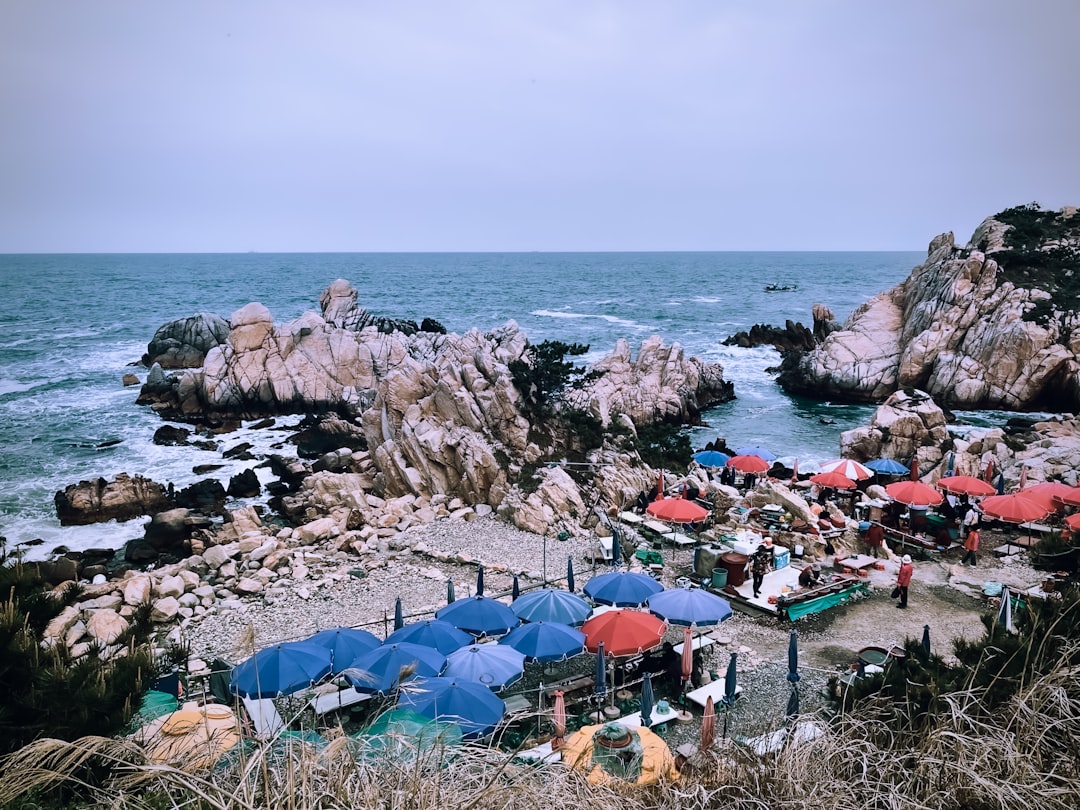
This is a rocky seaside park with walking trails and okay views. It’s less about swimming and more about walking. The rocks are interesting, the air is ocean air, and locals use it for evening walks. Free entry. If you have a car and want to kill 1-2 hours, it’s pleasant enough. But it’s not a destination in itself.
Ulsan Grand Park
A large public park with gardens, a small zoo, and walking areas. Admission to the zoo is 5,000 KRW (kids 3,000 KRW). The zoo is actually not terrible if you’re traveling with children. The park itself is free to walk around. I visited on a Saturday and it was moderately crowded with local families. Best visited on a weekday morning if you can.
Where to Eat and Practical Tips
Food Worth Your Money
Skip the tourist restaurants near the beaches. Go to downtown Ulsan near Ulsan Station instead. There’s a good restaurant district around the Nonhyeon area (about 20 minutes from the station by bus). I had incredible fresh seafood at a small pojangmacha (tent restaurant) area near the fish market. Grilled fish, octopus, and soup for four people cost around 80,000 KRW total. Most Korean locals eat here, not tourists.
For coffee, hit up one of the many independent cafes downtown—they’re genuinely better than Seoul chains and cheaper. Average coffee costs 3,500-5,000 KRW. The cafe culture here is real, just smaller-scale.
Practical Things Locals Know
Bring cash. Many smaller restaurants and beach shops don’t accept cards reliably. The 7-Elevens and GS25 convenience stores are everywhere and have decent food and drinks at reasonable prices (kimbap around 4,000-6,000 KRW). Sunscreen isn’t widely available—bring your own or buy it in Seoul before you come. Most beaches have lifeguards in summer (June-August), but not all year.
If you’re visiting the beaches, go early (before 10 AM) or late afternoon (after 4 PM). The sun hits hard midday, and there’s limited shade. Tap water is safe to drink everywhere.
Honest Take
Go to Ulsan if you want a slower pace than Seoul or Busan, access to actual beaches without the crowds, and a genuine glimpse of modern Korea that isn’t designed for tourists. Skip it if you’re only in Korea for a week and want maximum Instagram moments. Best time to visit is late May, early June, or September—warm enough to swim, cool enough to walk around comfortably. Avoid July and August unless you specifically want to swim. One thing I wish I’d known before my first visit: there’s nothing magical about Ulsan. It’s not a hidden gem waiting to blow your mind. It’s a functional industrial city with decent beaches nearby. That’s not a bad thing—sometimes functional is exactly what you need. Don’t expect fairy tales. Expect decent food, quiet beaches, and a real slice of Korea where people actually live and work.