Opening
Busan’s worth your time if you actually like cities—messy, real ones where you’re not constantly performing for Instagram. I’ve been here maybe a dozen times over the years, and honestly, it’s nothing like the brochures. The beaches are fine but crowded and kind of grimy. What keeps me coming back is the neighborhoods: Gamcheon, Choryang, the alleyways around Biff Square where you stumble into places that feel like they haven’t changed in 20 years. If you’re expecting a polished resort town, you’ll be disappointed. If you want to see how actual Korean people live outside Seoul, this is it.
Getting There
From Seoul
KTX (Korea Train Express) from Seoul Station to Busan Station takes 2 hours 40 minutes. The ticket costs between 59,000–65,000 KRW depending on train type and when you book. It’s the most comfortable option and deposits you right in the city center. There are also buses from Gangnam Express Bus Terminal (about 4–5 hours, 30,000–40,000 KRW), which is cheaper but honestly, you lose too much time sitting.
Within Busan
The subway system is straightforward. Line 1 and Line 2 cover most tourist areas. A single ride costs 1,250 KRW for most journeys. Get a rechargeable transit card (Cashbee or similar) at any convenience store. Most guides will tell you to hire a taxi or use Kakao Map navigation, which is true, but what they won’t mention is that taxis here are weirdly unpredictable—some drivers speak zero English, and the meters can be temperamental. I’ve learned to just use the subway. It’s cleaner, faster, and you avoid the awkward confusion.
What to Do / See
Gamcheon Culture Village
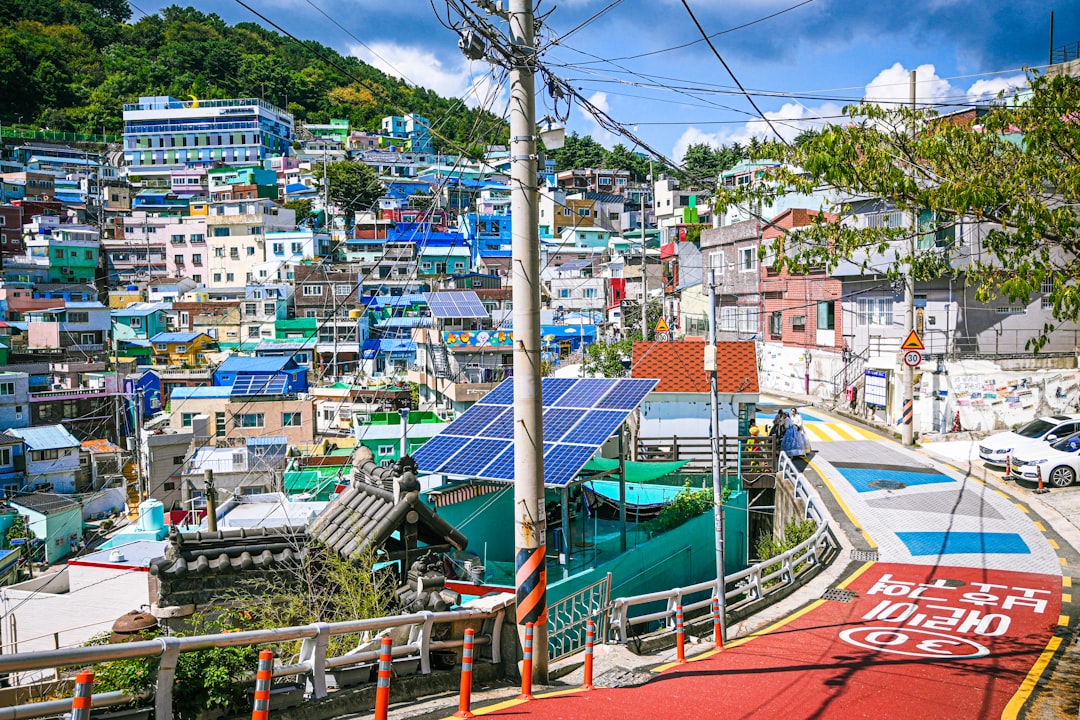
This is the neighborhood everyone comes for, and yeah, it deserves the attention. Colorful houses stacked on a hillside overlooking the harbor. Narrow alleys, street art, tiny cafes. But here’s the thing: go early. Like 7:30 or 8 a.m. on a weekday if possible. By 10 a.m., it’s packed with tour groups and it becomes unpleasant. Entry is free, though some cafes and small museums charge 3,000–5,000 KRW. I went during a Tuesday morning in October and had almost the entire place to myself. The same spot on a Saturday? Shoulder-to-shoulder with people posing for photos. There’s a small cable car (Gamcheon Dream Cable Car) that costs 8,000 KRW one-way if you want to skip walking up the hill—honestly worth it if your knees aren’t great, but I prefer walking to understand the actual layout.
Choryang Dongbangsaek (Paint Street)
Less famous than Gamcheon but more authentic. This is where local artists actually work and live. There’s genuine color here—walls painted in geometric patterns and murals that aren’t trying too hard. No gift shops. No crowds. You’ll see actual residents going about their day, which somehow makes it feel less touristy. It’s about a 10-minute walk from Busan Station or take subway Line 1 to Jungang Station (Exit 7). Free to walk around. I spent two hours here and maybe saw 30 other tourists the entire time. This is what Gamcheon probably looked like 10 years ago.
Beomeosa Temple
If you want quiet and some actual history, this is it. A working Buddhist temple in the foothills north of the city. Entry is 5,000 KRW. Take subway Line 1 to Bokcheon Station, then a bus or taxi. It’s about 30 minutes from downtown. The temple itself is modest—wooden buildings, a small garden, monks walking around. There’s a hiking trail behind it if you’re into that. I went on a rainy Wednesday and basically had the place to myself. The caretaker made me tea. It’s the kind of experience you don’t get at the crowded temple near Myeongdong in Seoul.
Jagalchi Fish Market
The real market, not the sanitized tourist version. This is the largest seafood market in Korea. Open 5 a.m. to midnight, though the real action is 5–10 a.m. Massive, chaotic, smells like the ocean, vendors yelling. You can buy fish and have restaurants in the building cook it for you immediately. It’s overwhelming if you’re not expecting it. Entry is free, but you’ll spend money eating. I found some of the freshest sashimi I’ve had for 12,000 KRW. Fair warning: it’s not for everyone. If you hate crowds or strong fish smells, skip it. But if you want to see how the city actually operates, this is it.
Yongdusan Park
This one disappointed me, honestly. It’s a small park with a memorial tower and some walking paths. The view of the harbor is decent, but nothing special. Entry to the Busan Tower is 8,000 KRW and the observation deck is just… fine. I see it recommended constantly, but I’d spend your time elsewhere. It’s not bad, just forgettable.
Where to Eat / Practical Tips
Food Spots That Actually Matter
Milmyeon (cold wheat noodles) is the Busan specialty. Try it at any jjimjilbang (Korean bathhouse) or dedicated milmyeon place—expect to pay 7,000–10,000 KRW. Nakji bokkeum (stir-fried octopus) is another local standard. There’s a whole alley near Nampodong with restaurants doing this for 15,000–20,000 KRW. Galbijjim (braised short ribs) at small local restaurants will run you 25,000–35,000 KRW per portion. I usually go to places with no English menu and point at what other people are eating. Honestly works better than reading reviews.
Practical Things Locals Know
Convenience stores (GS25, CU, Emart24) are everywhere and their kimbap and tteokbokki are legitimately good and cheap—3,000–5,000 KRW. Download Naver Map or Kakao Map before you arrive. Google Maps doesn’t work reliably. Public wifi exists but the password system is annoying, so just use your phone data plan. Most places don’t take cards—bring cash. ATMs are easy to find but don’t expect English. The tourist information center near Busan Station is actually helpful, though the staff speak limited English.
Honest Take
Go to Busan if you’ve been to Seoul twice already and want to see another part of Korea that feels different—grittier, smaller, less polished. Skip it if you’re only in Korea for a week and want maximum famous-landmark checking. The best time is September through November: warm but not oppressive, fewer tourists than summer. Go in February and you’ll freeze and see rain constantly. One thing I wish I’d known before my first visit: bring comfortable walking shoes. This city is hills and alleyways and you’ll do way more walking than you expect. And don’t believe the Instagram version of Gamcheon. The real version is better.