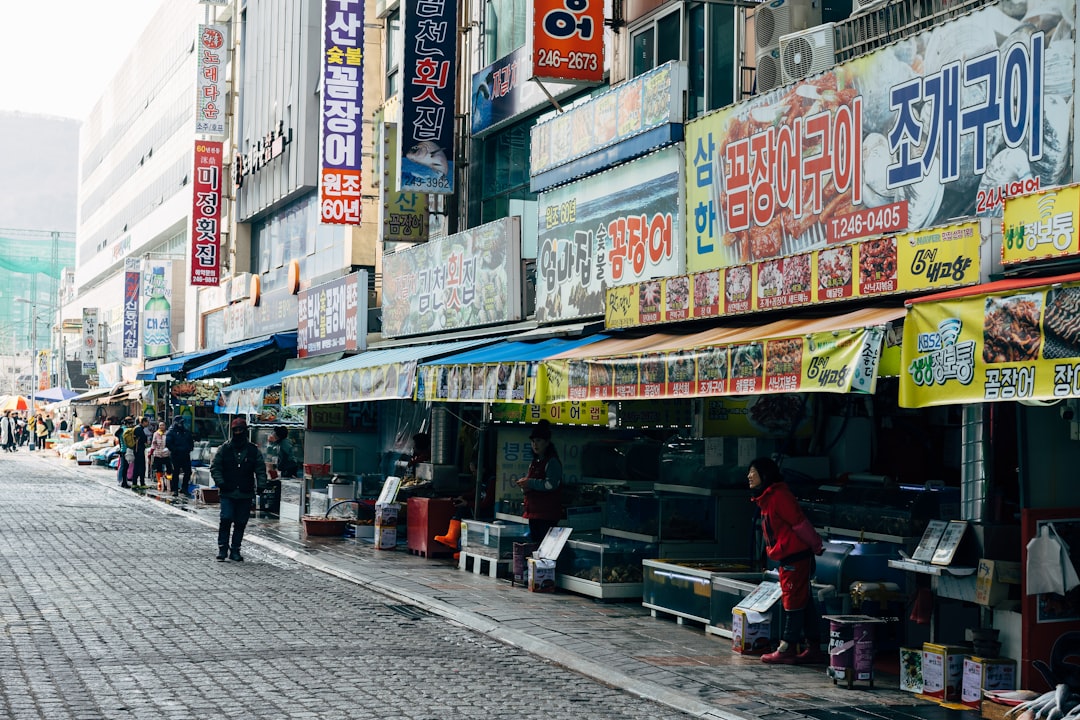
Busan’s Legendary Seafood Markets: Where to Find Fresh Catches
Jagalchi Market: The City’s Largest Fish Market
Jagalchi Market sits in the heart of Busan’s waterfront and is genuinely massive – expect to spend 2-3 hours exploring properly. This isn’t a polished tourist attraction; it’s a working market where fishermen unload daily catches at 4 AM, and the energy is real. The main building spans multiple floors with hundreds of vendors selling everything from sashimi-grade tuna to sea urchin, live octopus, and prawns.
You’ll find the market at 37 Jagalchi-ro, Jung-gu. Take Line 1 subway to Jagalchi Station (Exit 10) – journey time from central Busan is about 15-25 minutes depending on your starting point. The market opens at 5 AM, though most vendors set up by 7 AM and stay until around 7 PM. Come early if you want the best selection and lighter crowds.
Prices vary wildly depending on what you buy, but expect to pay 15,000-45,000 KRW for a portion of fresh sashimi. The market’s strength is buying raw fish and eating it immediately at one of the restaurants inside – you select your catch, pay the fishmonger (typically 3,000-5,000 KRW preparation fee), then head upstairs to eat it with rice, soup, and banchan (side dishes) for an additional 8,000-15,000 KRW. This is genuinely excellent value.
Busan Fish Market (Soo Fish Market)
Located at 1-1 Choryang-ro, Dong-gu, this market is smaller and less touristy than Jagalchi, which many locals actually prefer. Take Line 1 to Busan Station, then transfer to Line 2 toward Jangsan Station and get off at Choryang Station (Exit 1). The walk takes about 10 minutes from the station.
Opening hours are 6 AM to 6 PM daily. What makes this market worthwhile is the concentration of raw fish restaurants around the perimeter – they’re cheaper than Jagalchi equivalents, often 20-30% less expensive. You’ll see locals eating here during lunch, which is always a good sign. Expect to spend 12,000-20,000 KRW for a complete seafood meal including rice, soup, and banchan.
Street Food Neighborhoods and Night Markets
Nampo-dong Street Food District
This pedestrian area near Nampo Station (Line 1, Exit 5) is where tourists and locals converge for casual eating. The main street runs parallel to Nampo-ro and fills with vendor stalls selling tteokbokki (spicy rice cakes, 5,000-7,000 KRW), hotteok (sweet filled pancakes, 3,000-4,000 KRW), mandu (dumplings, 4,000-6,000 KRW), and fish cakes on skewers (3,000-5,000 KRW per skewer).
The honest note: this area is genuinely crowded, especially weekends and evenings. Vendors are used to tourists, prices are slightly inflated compared to residential areas, and you’ll shoulder-check people constantly. That said, the food quality is consistently good because competition is fierce. Go on a weekday afternoon for a better experience. Most stalls operate 11 AM to 10 PM.
Biff Valley (Beef Alley) – Gwangbok-ro
Despite its English name suggesting otherwise, Biff Valley isn’t purely about beef – it’s a dense street lined with restaurants, pojangmacha (street tent restaurants), and drinking spots specializing in grilled meats and seafood. Located at Gwangbok-ro, Jung-gu, it’s about a 10-minute walk from Nampo Station (Line 1) heading inland. The area stretches for several blocks.
You’ll find gopchang (grilled beef intestines, 12,000-18,000 KRW per portion), nakji bokkeum (stir-fried octopus, 15,000-20,000 KRW), and fresh grilled fish (18,000-35,000 KRW). Most places are open 11 AM to 11 PM, with heavier foot traffic after 6 PM. Pick a restaurant based on what looks busy – the turnover means fresher food. Banchan is always included.
Hidden Restaurant Districts for Serious Eaters
Millak Food Alley – Under the Overpass
Millak is genuinely under an overpass on Millak-ro in Saha-gu, and it’s absolutely worth the journey. This collection of about 20-30 small restaurants serves primarily seafood stew, raw fish platters, and marinated crab. Take Line 2 to Millak Station (Exit 3) and walk about 8 minutes. The area has zero English signage and virtually no tourists, which is precisely why it’s good.
A seafood stew here costs 18,000-25,000 KRW. Quality is exceptional because these restaurants have been family-run for 20-30 years and don’t rely on tourism marketing. Opening hours are roughly 11 AM to 10 PM, though many close Mondays. Call ahead if you’re fussy about exact timings – most places only have Korean phone numbers, so use Naver or Papago translation apps.
Guksu Alley (Noodle Alley) – Bujeon Market Area
This alley near Bujeon Market in Jung-gu specializes in kalguksu (knife-cut noodles) and jjamppong (spicy seafood soup). From Jagalchi Station, take a taxi for 5,000-7,000 KRW or walk 15 minutes. The alley consists of 15-20 restaurants crammed together, many operating since the 1970s.
A bowl of kalguksu with seafood costs 10,000-12,000 KRW, while jjamppong runs 12,000-15,000 KRW. These are lunch-focused spots, typically open 10:30 AM to 4 PM, so plan accordingly. The portions are enormous – one bowl easily feeds two people. This is where office workers from surrounding areas eat, not tourists.
Practical Tips and Things Guides Don’t Mention
Payment and Communication Realities
Most markets and street food vendors now accept card payments via mobile systems, but some older stall owners prefer cash. Carry at least 50,000 KRW in notes. English is genuinely limited in these spaces – a translation app is essential. Many restaurant owners will point at photos or prices written on paper; this is normal and not rude.
Hygiene and Seasonal Considerations
Markets can smell intensely of seafood – this is normal and not a sign of poor hygiene. The fast turnover and chilled storage mean food is safe. Raw fish consumption carries minimal risk in South Korea due to strict regulations. However, avoid these markets during extreme heat waves (August) when food sits longer.
Spring (March-May) and fall (September-October) offer the best eating experiences – weather is pleasant for wandering, and seasonal seafood is at peak freshness. Winter means fewer tourists but colder conditions for market walking. Summer brings crowds and humidity.