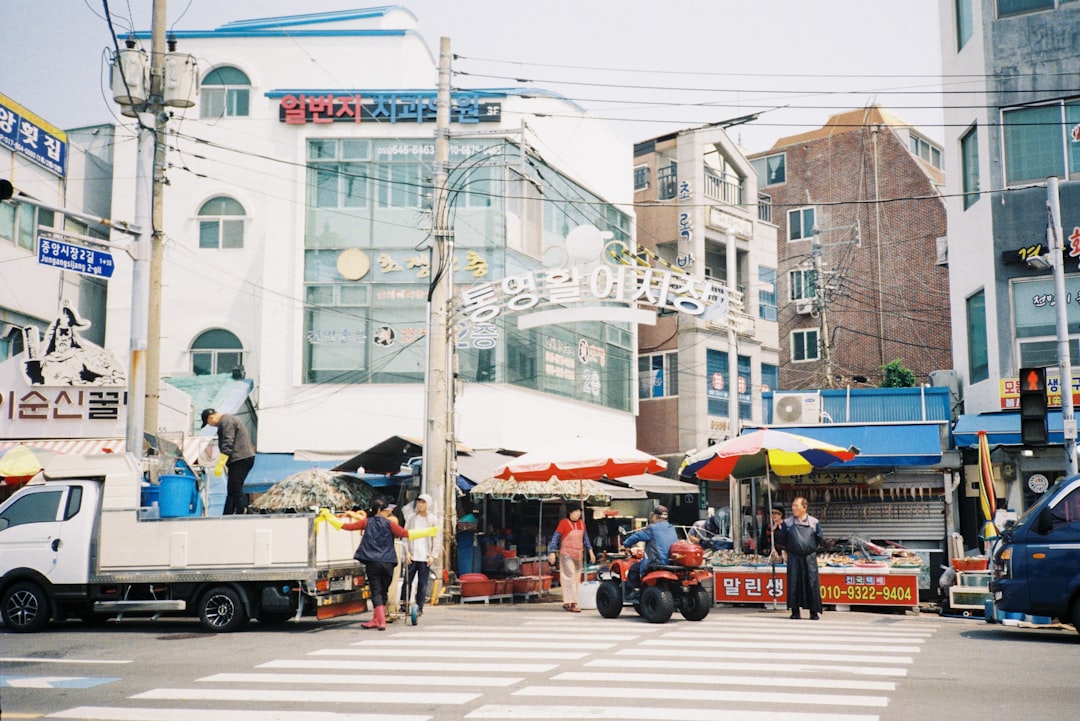
Why Tongyeong, Actually
Tongyeong is one of those places I keep coming back to because it doesn’t feel like a typical Korean tourist destination. It’s a port city on the south coast with decent seafood, actual ocean air that doesn’t smell like Seoul, and a few quieter islands you can day-trip to without needing a detailed plan. It’s not Instagram-famous and that’s mostly the point. That said, it’s not a destination that’ll blow your mind if you’re expecting cliffs or pristine beaches — it’s more about the atmosphere and fresh food than dramatic scenery.
Getting There
From Seoul, take the KTX (Korea Train Express) from Seoul Station directly to Tongyeong Station. The trip takes 4 hours 20 minutes and costs 64,700 KRW for a regular seat. Trains run roughly every 1–2 hours throughout the day. If you want to save money, there’s an express bus from Gangnam Express Bus Terminal that takes 5 hours 30 minutes and costs around 35,000–40,000 KRW, but honestly, I’d pay the extra for the train. The difference in comfort is worth it.
What most guides miss: once you arrive at Tongyeong Station, you cannot walk to the main harbor area or downtown. It’s about 8 km away. You need to take a local bus — get a T-money card and hop on bus 1, 2, or 3 (2,400 KRW). The trip takes 15–20 minutes depending on traffic. Some travel sites make it sound like the station is near everything, which it isn’t. Taxis are around 20,000–25,000 KRW if you’re impatient.
What to Do and See
Downtown Harbor Area and Dongpirang Wall Painting Village
The harbor itself is worth a 30-minute walk. You’ll see fishing boats, seafood stalls, and older Korean men in the kind of casual clothes you only see in actual fishing towns. There’s a decent waterfront promenade with some cafes, though nothing fancy.
Dongpirang Wall Painting Village is about 2 km from the harbor (take bus 16 or a 5,000 KRW taxi ride). It’s a small hillside neighborhood where local artists painted murals on residential buildings a few years ago. I’m being honest here: it’s kind of small and you can walk through the whole thing in 30–40 minutes. Most of the murals are decent but not exceptional. It gets crowded on weekends around 2–4 PM, so go early morning or late afternoon. No entry fee. Some shops sell local crafts and coffee, but prices are marked up for tourists.
Tongyeong Cable Car and Mireuksan Park
The cable car (Tongyeong Danggogae Cable Car) runs up Mireuksan mountain and costs 9,000 KRW for a round trip. The ride takes about 8 minutes. The view at the top is fine — you can see the harbor and some islands — but it’s not stunning. The park area has basic walking trails and a few restaurants. I’d skip this unless you want to kill an hour or the weather is unusually clear. Most days, there’s enough haze that the view disappoints. Opening hours are 9 AM–6 PM (winter until 5 PM). Weekday mornings are quieter.
Navy Port and Museum
There’s a small naval museum and port area (Tongyeong Naval Port Museum) that’s occasionally open, but information is sparse and hours are unreliable. I went twice and found it closed once. Skip it unless you specifically want naval history. When I did get in, it was 5,000 KRW and took 15 minutes to see everything.
Island Day Trips
This is actually where Tongyeong gets interesting. Ferry terminals near the harbor run boats to several islands. Bijindo and Yongdorodo are the main tourist ones, about 30–40 minutes by ferry. Round-trip ferry costs around 22,000–28,000 KRW depending on the island.
Bijindo has a small beach, hiking trails, and a couple of restaurants. Yongdorodo is quieter with better swimming spots. Both get busy on weekends and summer weekends are genuinely crowded. I’d aim for a weekday or visit in spring (April–May) or fall (September–October). The islands themselves aren’t dramatically different from other Korean island day trips, but they’re worth half a day if you have time.
Where to Eat and Practical Tips
Seafood
The whole reason to eat in Tongyeong is the seafood. Walk around the harbor area and you’ll find countless small restaurants and pojangmacha (street stalls). Prices are reasonable — fresh grilled fish runs 12,000–18,000 KRW per person, seafood jjigae (stew) is similar. One specific spot I return to: there’s a small pojangmacha cluster near the ferry terminal with sashimi and grilled fish. It’s not fancy, it’s full of locals, and it’s good. Names are hard to remember but just walk along the harbor.
One honest note: some restaurants will try to upsell you on expensive items or not clearly state prices upfront. Always ask the price before ordering. It’s not a scam exactly, but tourists get charged differently sometimes.
Coffee and Cafes
Tongyeong has gotten more cafe-trendy in recent years, which is fine. Most charge 5,000–7,000 KRW for coffee. Nothing special but decent for a break.
Practical Tips
Bring cash. Many smaller restaurants don’t accept cards. ATMs are easy to find near the harbor and train station. If you need a pharmacy, GS25 and CU convenience stores are everywhere (2,400 KRW minimum for cards). The city isn’t large so walking is fine during the day, though the streets aren’t always well-lit at night. It’s generally very safe.
Honest Take
Tongyeong is best for people who’ve already seen Seoul, Busan, and Jeju and want something slower. It’s not a mandatory stop and you won’t regret skipping it if you’re tight on time. If you like eating fresh seafood, wandering a quiet port town, and don’t need major attractions, it’s worth 2–3 days. Best time is April, May, September, or October — the weather is pleasant and it’s less crowded than summer. Winter is gray and quiet, which some people like but it’s genuinely less enjoyable. One thing I wish I’d known earlier: don’t expect the city itself to be the main draw. The point is the seafood, the slower pace, and the easy access to islands. If that sounds good, go. If you need iconic sights or major experiences, skip it.