Opening
Busan is worth the trip, but not for the reasons you think. Most visitors come for Haeundae Beach and the shopping, then leave disappointed. The real Busan—the one worth your time—is in the older neighborhoods, the fishing boats at 5am, and the temples tucked into mountainsides where tourists don’t bother going. I’ve been here maybe fifteen times in the past three years, and I still find streets I’ve never walked down. It’s messier and grittier than Seoul. That’s exactly why I keep coming back.
Getting There
From Seoul, take the KTX from Yongsan or Seoul Station. It takes 2 hours 40 minutes and costs around 57,400 KRW for a regular reserved seat. If you’re flexible, the 6:15am departure gets you in Busan by 9am—perfectly timed to catch the morning seafood market. The express buses from Gangnam Station are cheaper (25,000–30,000 KRW) but take 4–5 hours. Not worth saving 30 bucks for three extra hours stuck in traffic.
Once you’re in Busan, the subway is your best friend. A single journey costs 1,250–2,450 KRW depending on distance. Get a rechargeable card at any convenience store. Most foreigners miss this: there’s a KTX bus station underneath the main KTX station. If you’re staying in Busan proper rather than the airport area, catch the subway from there—saves you 15 minutes and it’s less chaotic than the main station exit.
What to Do and See
Jagalchi Market
This is the real deal. Jagalchi is Busan’s working fish market, and the energy here is completely different from Seoul’s touristy markets. Go before 10am if you want to see it at its peak. Vendors are slicing fish, the smell hits you immediately, and locals are actually buying seafood—not tourists taking photos.
The ground floor is the wholesale area. You can walk through, watch the action, grab fresh sashimi from stalls for 8,000–15,000 KRW per portion. The upper floors are restaurants where you can sit down with your purchase. Vendors will cook what you buy for a small fee (around 3,000–5,000 KRW), which is a good deal. Opening hours start as early as 5am for the real fishermen, but it’s open until around 8pm. Peak crowd time is 9–11am and 5–7pm. The mid-afternoon (2–4pm) is dead quiet, which some people prefer.
Honestly? The touristy upper-floor restaurants are overpriced. You’re paying extra just to sit near a window. Get your fish from downstairs vendors and eat standing up or find a tiny hole-in-the-wall noodle place nearby.
Beomeosa Temple
This one’s not crowded because it’s a real working temple, not a photo op. It’s nested into the mountains above Busanjin-gu, about 30 minutes from central Busan by subway. Take Line 1 to Choryang Station, then a taxi or local bus (around 5,000 KRW). Entry is free. The main halls are beautiful, but what gets me is the views from the temple grounds—you can see across to the Nakdong River delta and the industrial port area. It’s a stark contrast that somehow works.
The temple has a small café run by monks where you can get yuja tea (yuzu tea) for 5,000 KRW. Opening hours are roughly 6am to 6pm, but it’s best visited in late morning when the light is good and it’s still relatively quiet. By 1pm on weekends, tour groups start arriving.
Gamcheon Culture Village
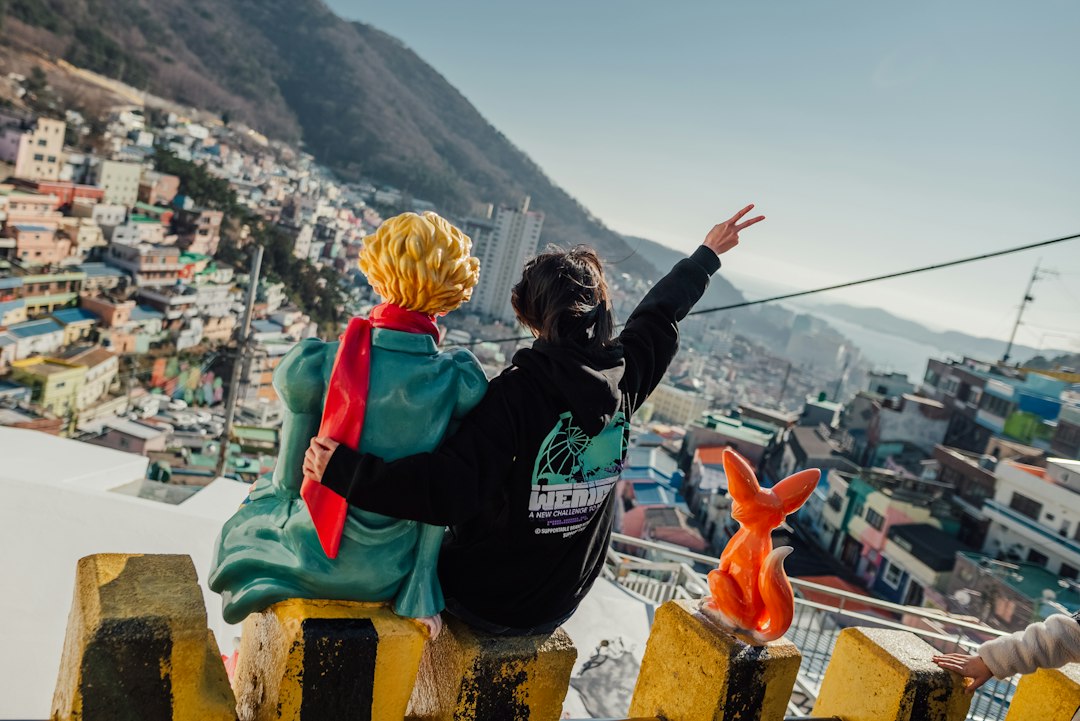
I need to be honest here: Gamcheon is worth visiting once, but it’s become aggressively touristy. When I first went three years ago, it was actually quiet. Now it’s packed with organized tour groups, Instagram tourists, and overpriced cafés. The colorful houses are genuinely charming, and the history—this was a refugee settlement in the 1950s—matters. But you’re fighting crowds the entire time.
Go early. I mean 8:30am early, before the buses arrive. Entry is free. Getting there: subway Line 1 to Toseong Station (Exit 3), then a 15-minute walk uphill or a taxi for 4,000 KRW. Avoid weekends if possible. If you do go, skip the main drag of painted houses and alleys—go up to the higher residential streets where actual residents still live. That’s where you’ll find real quiet and better photos anyway.
Yongdusan Park
This one’s underrated. The park has the Busan Tower (entry 8,000 KRW for the observation deck), but honestly the tower is dated and the views aren’t significantly better than what you get from the free observation areas around the city. What’s good about Yongdusan is just walking around. There are temples, shrines, local restaurants, and it connects directly to Jagalchi if you’re planning a half-day loop.
The park itself is free. You can walk it in about 45 minutes. Best time is late afternoon when the light softens and it’s less crowded. There’s a small shrine dedicated to American soldiers from the Korean War—it’s easy to miss, but worth finding.
Where to Eat and Practical Tips
Forget the expensive sushi places in Haeundae. Eat where locals eat. Near Jagalchi, there’s a tiny milkfish kalguksu place (수수미식당) that’s been there for twenty years. You’ll spend 8,000 KRW for a massive bowl of noodles with fish broth. No English menu, cash only, but the staff are patient with foreigners.
For seafood ramyeon (spicy noodles with fresh fish), go to any pojangmacha (tent restaurant) around the market. 12,000–15,000 KRW gets you a massive bowl. The food isn’t fancy—it’s functional and delicious.
Practical things: bring cash. A lot of small vendors and markets don’t take cards reliably. Download Naver Map or Kakao Map on your phone—Google Maps works, but the Korean apps are more up-to-date. Busan’s weather can shift fast. I’ve shown up in what looked like clear skies and gotten rained on by 2pm. Always bring a light jacket.
One more thing: if you’re there in spring or autumn, the weather is perfect. Summer is oppressively humid (30+ degrees with 80% humidity). Winter is gray and cold, but less crowded. I prefer late September or October.
Honest Take
Go to Busan if you like cities that don’t feel fully packaged for tourists yet. Skip it if you want pristine beaches or Instagram-ready experiences—the coast is industrial and the neighborhoods are gritty. Busan is worth two days if you want to eat real seafood, see how Korean working-class neighborhoods actually live, and get away from Seoul’s polish. If you’re planning to spend two days in Busan, don’t stay in Haeundae. Stay in Jung-gu or Busanjin-gu near the markets and temples. One thing I wish I’d known before going: the city is way bigger and more spread out than it appears on maps. Budget more time for getting between neighborhoods than you think you’ll need.