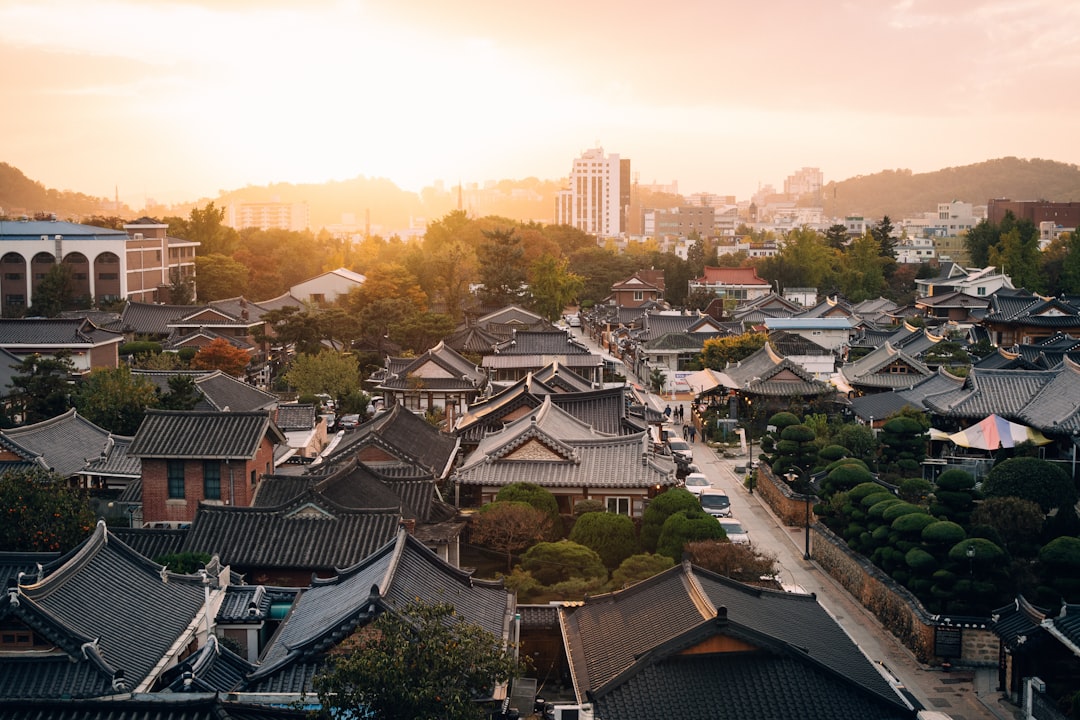
Why Jeonju Is Actually Worth Your Time
Jeonju caught me off guard. I went expecting a sleepy provincial town and found myself staying three days instead of one. The Hanok Village is the real draw — not because it’s “untouched” or whatever the travel blogs claim, but because it’s genuinely quiet in ways Seoul stopped being years ago. The street food is legitimately excellent, not the Instagram-bait version you get in Myeongdong. Fair warning though: if you’re expecting some pristine historical preservation, you’ll be disappointed. It’s a living neighborhood with actual residents, which means convenience stores next to 300-year-old houses and laundry hanging between wooden beams.
Getting There
From Seoul
Take the KTX from Seoul Station or Yongsan Station — it’s 2 hours 10 minutes to Jeonju Station. A regular ticket costs around 31,000 KRW one way. The KTX is worth it over buses; I took a bus once out of stubbornness and it took nearly 4 hours with multiple stops. From Jeonju Station, catch bus 12 or 13 heading toward the Hanok Village — costs 1,450 KRW, takes about 20 minutes. A taxi is maybe 8,000 KRW if you’re impatient.
What Most Guides Miss
Everyone tells you to go to Jeonju Station and take a bus. They don’t mention that taxis queue up outside the station exit and drivers will hassle you, claiming the buses are “broken” or “not coming.” They’re almost never broken. Ignore them. Also, the Jeonju area bus system is confusing at first — use Naver Map or Kakao Map to confirm which bus actually goes where. I got on bus 15 once convinced it was heading to the village and ended up in a residential area with no tourists in sight.
What to Do and See
Hanok Village (한옥마을)
This is the main reason you’re coming. It’s genuinely walkable — the whole neighborhood is maybe 6 square kilometers, so you can cover most of it on foot in 2-3 hours. The houses are actual traditional Korean homes from the Joseon Dynasty era, though many are now cafes, restaurants, or galleries. Entry is free.
Go early. I’m serious. If you arrive after 11 AM, especially weekends, you’ll be shoulder-to-shoulder with tour groups. I visited on a Tuesday morning at 8:30 AM and had entire streets to myself. By noon the same day, it was packed. The narrow alleys are genuinely photogenic, but the light is best in early morning anyway.
The Gyeonggi Bank Museum is housed in an old colonial building and costs 3,000 KRW entry. It’s small and honestly not essential, but if you want a short break from walking, it’s air-conditioned and interesting enough. Open 9 AM to 6 PM, closed Mondays.
Jeonju Crafts Museum
This one’s actually solid. Located at the edge of the village proper, it showcases traditional Korean crafts with a focus on Jeonju’s specialties — particularly hanji (traditional Korean paper) and wooden furniture. Entry is 3,000 KRW. The exhibits rotate but usually feature hands-on demonstrations of paper-making. Open 10 AM to 5 PM, closed Mondays. The top floor has a window overlooking the village that’s genuinely nice for photos.
What Disappointed Me
The “Traditional Korean House Tour” experience packages. Multiple tour operators now offer these 30-minute “immersion” experiences where you put on a hanbok (traditional dress) and get your photo taken inside a hanok. They charge 25,000-40,000 KRW for what amounts to wearing a costume for photos. Most of the houses are clearly set up just for this, with fake props and terrible lighting. I did it once and immediately regretted it. Spend that money on food instead.
Pungyeong Seonbi Culture Museum
Five kilometers outside the village proper. It’s dedicated to Joseon-era scholars and honestly, it’s a bit dry unless you’re specifically into that period. Entry 3,000 KRW. Most tourists skip it and they’re probably right to. I included it because I was being thorough, not because it’s essential.
Where to Eat and Practical Tips
Street Food
The alley near the main Hanok Village entrance (toward the Crafts Museum) is where you want to be. They serve tteokkochi (grilled skewered rice cakes), bindaetteok (mung bean pancakes), and pa-jeon (scallion pancakes). Most stalls charge 4,000-6,000 KRW per item. The tteokkochi vendor at the north entrance has been there for years and doesn’t speak English, but it’s worth the 5,000 KRW. Lines form by late morning on weekends.
Restaurant Recommendations
Jeonju is famous for bibimbap — the local version traditionally uses rice cooked over charcoal in stone bowls. Skip the tourist-focused spots near the main square. Go to Samgyetang Jip (참계탕집) — it’s actually a samgyetang (ginseng chicken soup) restaurant tucked into a side street, but they do the best bibimbap I’ve had outside Seoul. Figure 10,000-12,000 KRW per bowl. It’s crowded at lunch.
For coffee, the Hanok Village is drowning in cafes now. Most are aggressively trendy and mediocre. I’d recommend just getting coffee from a convenience store and sitting in the village instead. If you want something decent, Jeom Jeom Cafe (점점까페) serves real espresso and doesn’t have the annoying Instagram aesthetic. Americano is 4,000 KRW.
Local Tips
Bring cash. Many small vendors only take cash. Most cafes take card but older restaurants sometimes don’t. There’s an ATM near Jeonju Station if you need it. Also, parking is brutal on weekends — if you’re driving, arrive before 10 AM or expect to circle for 20 minutes.
Honest Take
Jeonju works best if you’re genuinely interested in Korean history and traditional architecture, or if you’re just burnt out on Seoul’s chaos. Don’t come expecting some undiscovered paradise — it’s commercialized, cafes outnumber residents now, and much of it feels designed for Instagram. Skip it if you only have one day in Korea or if you hate walking. Best time to visit is April to May or September to October when weather is perfect and crowds are smaller than summer. The one thing I wish I’d known: book a room in the Hanok Village itself if possible. Staying elsewhere means you’re dependent on buses and taxis. I stayed in a small traditional house conversion that was 80,000 KRW a night and could walk out at 7 AM to an empty village. That alone made the trip better than my first visit when I commuted from a hotel downtown.