Why Bother With Ulsan?
Look, Ulsan isn’t Instagram famous for a reason. It’s an industrial port city on Korea’s southeast coast that most tourists skip entirely. But that’s actually why I keep coming back. You get whale watching that genuinely works, coastal walks without the Busan crowds, and a real look at what modern Korea actually builds and manufactures—not just palaces and temples. The downside? It’s genuinely boring between activities. There’s minimal nightlife, limited shopping, and the city center feels like it’s perpetually under construction. If you need constant stimulation, don’t come.
Getting There
From Seoul, take the KTX (Korea Train Express) directly to Ulsan Station. The journey takes 2 hours and 45 minutes and costs 68,000 KRW for a general reserved seat. Trains run every 30 minutes throughout the day. When you arrive, the station is actually decent—modern and well-organized, which surprised me the first time.
Here’s what most guides miss: the subway system is minimal and confusing. Ulsan has only 2 subway lines. Don’t rely on it. Instead, download Naver Map or Kakao Map and use those for buses. Local buses run constantly and cost 1,350 KRW. Or just grab taxis—they’re cheap here, usually 3,000-5,000 KRW for short distances.
If you’re coming from Busan, it’s 1 hour by bus. The intercity bus terminal sits downtown, which is convenient. I’ve done this route multiple times and always prefer the train from Seoul if you’re starting there. It’s more reliable.
What to Do and See
Whale Watching (Jangsaengpo Wharf)
This is the main reason to visit. Jangsaengpo is Korea’s largest whaling port—yes, they still hunt whales here legally—and it’s oddly fascinating. Take the boat tours from April through October. Tours depart at 9 AM, 1 PM, and sometimes 4 PM depending on the season. The 2-hour tour costs 35,000 KRW per person. You need to book the day before through your guesthouse or directly at the ticket office.
Go in early morning (the 9 AM slot). The ocean’s calmer, and you’ll actually see whales. I went in July last year and spotted humpbacks at about 600 meters out. The crew’s experienced and knows exactly where to look. Bring motion sickness medication if you’re sensitive—the boat does rock a bit, even on calm days. The return is genuinely worthwhile if you time it right.
The wharf itself is worth an hour of wandering. You’ll see enormous fishing boats, processing facilities, and the whole industrial operation. It’s not pretty, but it’s real. Don’t expect a sanitized experience.
Taehwagang Park and River Walk
This is the city’s green space, about 15 minutes from the station by bus (routes 1, 5, or 13). The Taehwa River walk stretches for several kilometers and actually feels peaceful. The park entrance is free. There’s a botanical garden inside (8,000 KRW entry, open 9 AM-6 PM) that’s decent but not spectacular—I’d skip it unless you have extra time.
The best part is the riverside path itself. Go in the late afternoon around 4-5 PM. Locals walk here, families bike, and the light hits nicely. There are small cafes scattered along the way where you can grab coffee (3,500-5,000 KRW) and sit overlooking the water. I usually spend 2-3 hours here just decompressing.
Ulsan Industrial Heritage Museum
Industrial tourism is niche, but this museum actually works. It’s located in former shipyard buildings and documents Korea’s shipbuilding boom from the 1970s onward. Hours are 10 AM-6 PM, closed Mondays. Entry is 5,000 KRW. The exhibits are in Korean and English, and you’ll understand why Ulsan was (and still is) crucial to Korea’s manufacturing identity.
Honestly? I spent 90 minutes here and felt satisfied, not exhausted. The scale of what was built in those decades is genuinely impressive. But if industrial history bores you, skip it entirely. No shame in that.
Coastal Beaches
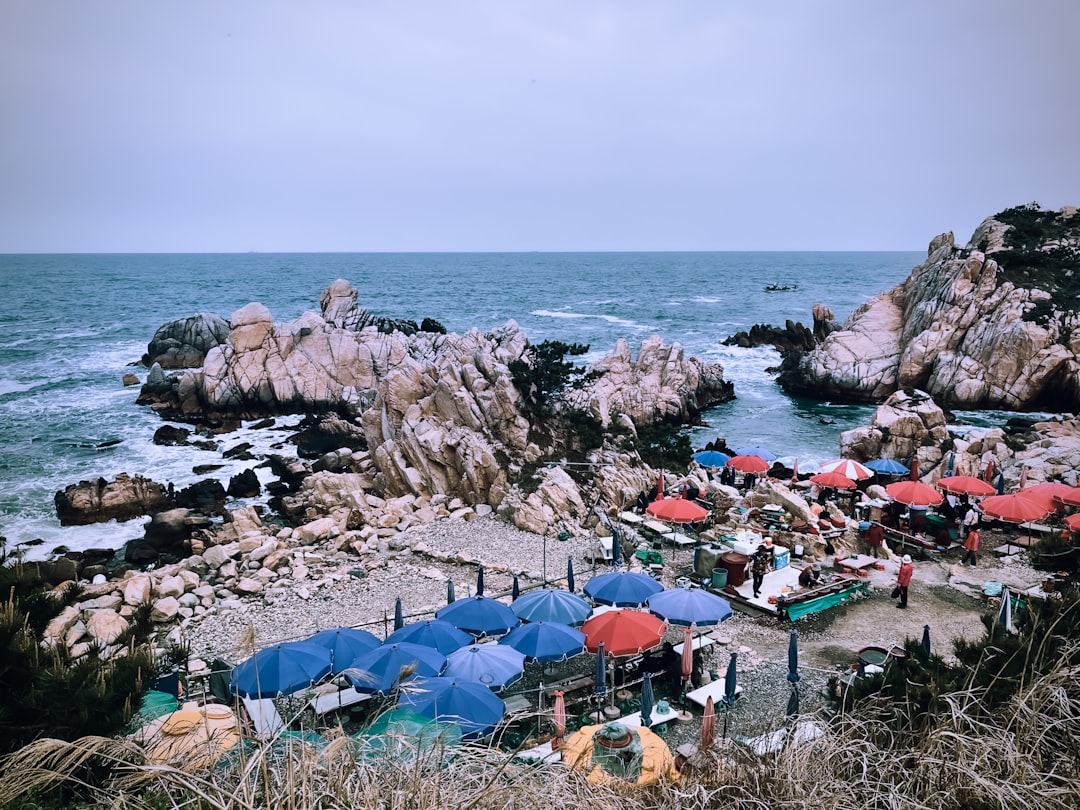
Everyone mentions Shinbawi Beach and Jeongja Beach. They’re real, they’re clean, and they’re less crowded than Busan options. Shinbawi is rockier and more sheltered; Jeongja has actual sand. Both are 20-30 minutes from downtown by bus. Go in the morning before families arrive (9-11 AM) or late afternoon (4-6 PM). The water’s cold even in summer—July average is around 23°C.
I went to Jeongja in August hoping for a hidden gem situation. It was fine, genuinely pleasant, but not worth planning a trip around alone. Go if you’re already in Ulsan and have a spare afternoon. Don’t come to Ulsan just for beaches—Busan or the southern islands do that better.
Where to Eat and Practical Tips
Ulsan has good seafood since it’s a port city. Try the local restaurants near Jangsaengpo. Raw fish, grilled squid, and whale meat sashimi if you’re curious (it tastes like very lean beef, 45,000 KRW per portion). I had it once. Interesting, not worth seeking out again.
Better option: find a simple pojangmacha (street food tent) near the wharf and order odeng (fish cakes) and tteokbokki. Costs around 5,000-8,000 KRW. Locals eat here. The food’s reliable.
For sit-down meals, there’s a cluster of restaurants around the station area. Expect 10,000-18,000 KRW for a decent lunch. Jjigae (stew) places are particularly good here. I had kimchi jjigae with pork at a small spot called “Myeongdong Jjigae” (just a local name, nothing fancy) for 12,000 KRW and it was perfect.
Practical note: convenience stores are everywhere—GS25, CU, Emart24. Stock up on water and snacks here rather than tourist spots. ATMs are reliable. Your card will work almost everywhere.
Honest Assessment
Go to Ulsan if you actually want to see whale watching happen, if industrial history interests you, or if you’re trying to understand Korea beyond the tourist trail. Skip it if you have limited time in Korea—spend that time in Seoul, Busan, or Gyeongju instead. The best time is April-June or September-October when the whale watching is reliable and the weather’s pleasant. Summer gets humid and crowded; winter is grey and cold. One thing I wish I knew: book whale watching tours two days ahead, not one. Summer availability fills up. Also, don’t expect Ulsan to feel “Korean” in the traditional sense. It feels like a working city that happens to be in Korea. That’s the appeal, actually, once you accept it.