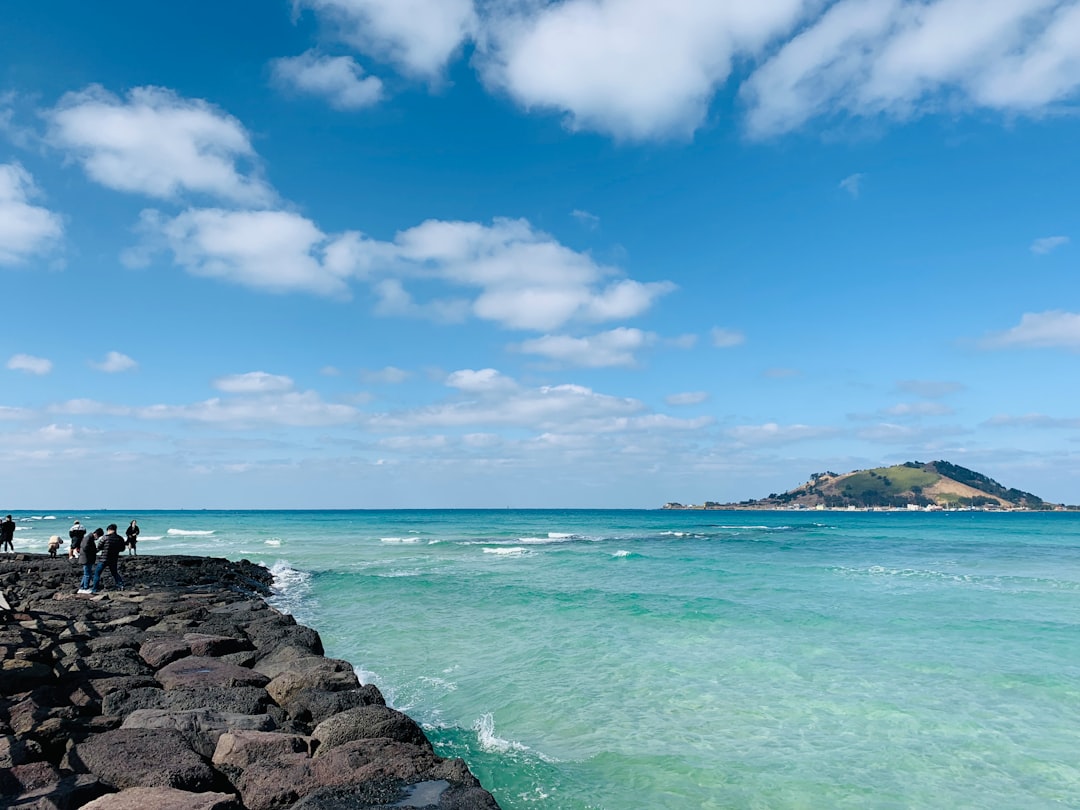
Why Bother Coming to Seongsan and Beyond?
Jeju Island’s eastern side gets overlooked because everyone’s obsessed with Hallasan and the western beaches. That’s actually the best part. I’ve been here four times now, and the area around Seongsan has genuine character — dramatic lava cliffs, actual working fishing villages, and food that doesn’t exist on Instagram. The waterfalls are real and worth seeing, even if they’re not Niagara Falls-level spectacular.
Getting There: The Route Nobody Explains Properly
From Seoul, fly to Jeju International Airport (ICN to CJU). Flight time is 1 hour. Flights run 50,000–120,000 KRW depending on the airline and how far in advance you book. Budget airlines like Eastar and Jin Air are cheaper but still reliable.
Here’s what travel sites get wrong: they tell you to rent a car, which is good advice, but they don’t mention that Seongsan is only 40 minutes from the airport by car. Most people rent cars for the entire trip. I usually do 1 day rental for the eastern loop and take the airport bus back. A standard sedan costs 40,000–55,000 KRW per day.
If you don’t want to drive, take the 701 or 702 airport bus from the terminal directly to Seongsan. Cost is around 7,000 KRW. Travel time is 55–70 minutes depending on stops. Honest assessment: buses on Jeju are reliable but infrequent, so plan around their schedules, not the other way around.
What to Do and See
Seongsan Ilchulbong Sunrise Park
This is legitimately worth waking up for, but go at 5:30 AM, not 6:00 AM like the tour groups. Entry is 2,500 KRW. The hike is 20 minutes up a volcanic tuff cone. By 7:15 AM when the actual sunrise peaks, you’ll be sharing the summit with maybe 30 people instead of 300. The light hits the black sand beach below in a way that’s hard to photograph but easy to remember.
The park opens at 5:00 AM year-round. Bring a jacket even in summer — it’s windy and you’ll be standing still for 45 minutes. Bathrooms are at the entrance.
Seongeup Folk Village
Skip the “official” folk village if you want my honest take. It’s mostly reconstructed thatched houses that feel theatrical. Instead, walk around the actual village behind and around it. You’ll see real residents, actual basalt stone walls, and the architectural patterns that shaped how people lived here. There’s no entry fee if you stay off the main tourist path. I spent an hour here on my last visit and saw exactly two other tourists.
Cheonjiyeon Waterfall
This is the main waterfall everyone visits. Entry is 2,500 KRW. It’s a 30-minute walk down a paved path through forest. The waterfall itself is about 22 meters high and flows into a natural pool. It’s photogenic, genuinely nice, but not dramatic. I’m listing it because it’s convenient if you’re already in the area, not because it’s unmissable.
Go early, around 8:00 AM. By 10:00 AM, it fills with tour groups. Parking is free and plentiful.
Jeongbang Waterfall (The One Most Guides Actually Miss)
This is technically the only waterfall in Korea that falls directly into the ocean. It’s 35 meters high. Entry is 2,500 KRW. It’s 15 minutes west from Cheonjiyeon by car or about 3 km if you walk along the coastal path, which is actually lovely.
The waterfall itself is smaller than Cheonjiyeon and sometimes barely runs depending on rainfall. I visited in June once and it was almost dry — disappointing, honestly. But the location is special. The walk down to the viewing platform is short. Definitely go if you’re in the area, but don’t make it your main event.
Seongeup Black Pork Street
This isn’t a waterfall, but Seongeup is known for black pork (검은돼지). It’s just one street with about six restaurants. The pork is from local farms, and the meat is genuinely different — more marbling, richer flavor. Most places charge 12,000–16,000 KRW for a grilled portion. Grill it yourself at the table. This is worth the detour more than a second waterfall.
Where to Eat and Local Knowledge
Skip the main tourist restaurants in Seongsan town. Walk 2–3 blocks back and you’ll find actual local places. There’s a restaurant called 해녀의 밥상 (Haenyeo’s Table, roughly) where an older woman cooks seafood lunch sets for 10,000–13,000 KRW. No English menu, but point at what you want. She’ll give you side dishes with actual depth.
For breakfast before sunrise, the GS25 convenience store near Seongsan Ilchulbong has decent kimbap and coffee. Sounds basic, but it’s reliable and cheap (5,000–7,000 KRW).
Here’s what locals know: Jeju tangerines are in season November through January. If you’re visiting then, buy them at any market for about 1,000 KRW per pound. They’re genuinely exceptional and expensive in Seoul.
Bring cash. Many smaller restaurants and waterfall entrances don’t take cards reliably.
The Honest Take
Go if you want a break from Seoul crowds and actual character in a place. You’ll spend maybe 15,000 KRW on entry fees, another 30,000 on food, 60,000 on the car rental if you split a day, and the flight. It’s a solid 2-day trip if you’re patient and don’t expect dramatic nature — it’s more subtle than that. Skip it if you want Instagrammable waterfalls or luxury experiences. The best time is October or May when the weather’s clear and there aren’t typhoons. Go with someone patient who enjoys driving small coastal roads and eating without a plan. If I’m being completely honest, what I wish I’d known before the first visit: the island is smaller than you think, and the real value is in the driving between things, not the destinations themselves.