Opening
Daejeon isn’t sexy. It won’t make your Instagram explode. But if you’re tired of Seoul’s crowds and want to experience what regular Korean life actually looks like — while also hitting some genuinely solid museums and soaking in hot springs — it’s worth a two-day detour. I’ve been here maybe six times over the past four years, and it’s grown on me. The city has this no-nonsense vibe that feels refreshing after the intensity of the capital.
Getting There
From Seoul, take the KTX (Korea Train Express) from Seoul Station. It’s about 50 minutes, and tickets run 22,400 KRW one way for a standard seat. Alternatively, the regular train (Mugunghwa) takes 2 hours 15 minutes and costs 11,800 KRW if you’re on a budget. Express buses also run from Gangnam — around 18,000 KRW and about 2 hours — but honestly, the KTX is worth the extra money for not arriving exhausted.
Here’s what most guides don’t mention: Daejeon Station’s South Exit (남쪽 출구) is where you want to go. The North Exit is a maze of underground passages, and I spent 20 minutes confused there my first visit. From South Exit, you can catch local buses or grab a taxi. Taxi rides within the city center run 5,000-8,000 KRW typically.
Local Transit
The subway system here is actually pretty straightforward — three lines, easy to navigate. A single ride costs 1,450 KRW, or grab a rechargeable card (T-money) at any convenience store. Most spots you’ll want to visit are on Line 1.
What to Do / See
National Science Museum
This is the main draw for most visitors, and it’s solid. Located at Daedeok Danji Station (Line 1, about 20 minutes from central Daejeon), it’s free entry. Yeah, free. The permanent exhibitions are well done — nothing mind-blowing, but thoughtfully organized. The space exploration wing and the hands-on physics section are the standouts. Give yourself 2-3 hours here.
Go on a weekday morning if possible. I visited on a Saturday once and it was crawling with school groups. Weekday mornings before 11 AM? You’ll have entire rooms to yourself. Opens at 9:30 AM, closes at 5:50 PM (closed Mondays). There’s a cafe inside that’s overpriced, so grab coffee before arriving.
Expo Science Park
Right next to the National Science Museum (literally a 5-minute walk), Expo Science Park is where you go if you want something more outdoorsy and less crowded. Entry is 3,000 KRW. It’s not particularly impressive if I’m honest — some sculptures, outdoor exhibits, a small garden area. I’d skip it if time is tight. Worth 30 minutes if you’re already in the area and feeling it.
Yuseong Hot Springs (유성온천)
This is genuinely the highlight for me. The Yuseong area sits about 20 minutes from downtown Daejeon (take Line 1 to Yuseong Station). The hot spring water here is decent quality — mild sulfur smell, warm temperature, very clean. There are a bunch of jjimjilbangs (찜질방) and onsen-style bathhouses in the area. My go-to is a smaller place called Susin Jjimjilbang — 12,000 KRW for entry, and you can stay as long as you want. It’s not fancy, but it’s authentic and way less touristy than Seoul options.
Important detail: Go in late evening or during lunch hours if you want to avoid the post-work crowd. I went at 6 PM once and it was packed with salarymen. Evening (8 PM onwards) is better. The water temperature is usually around 42°C in the main bath — hot but manageable. Bring a small towel; they provide the basics but it’s good to have your own.
Jungang Market (중앙시장)
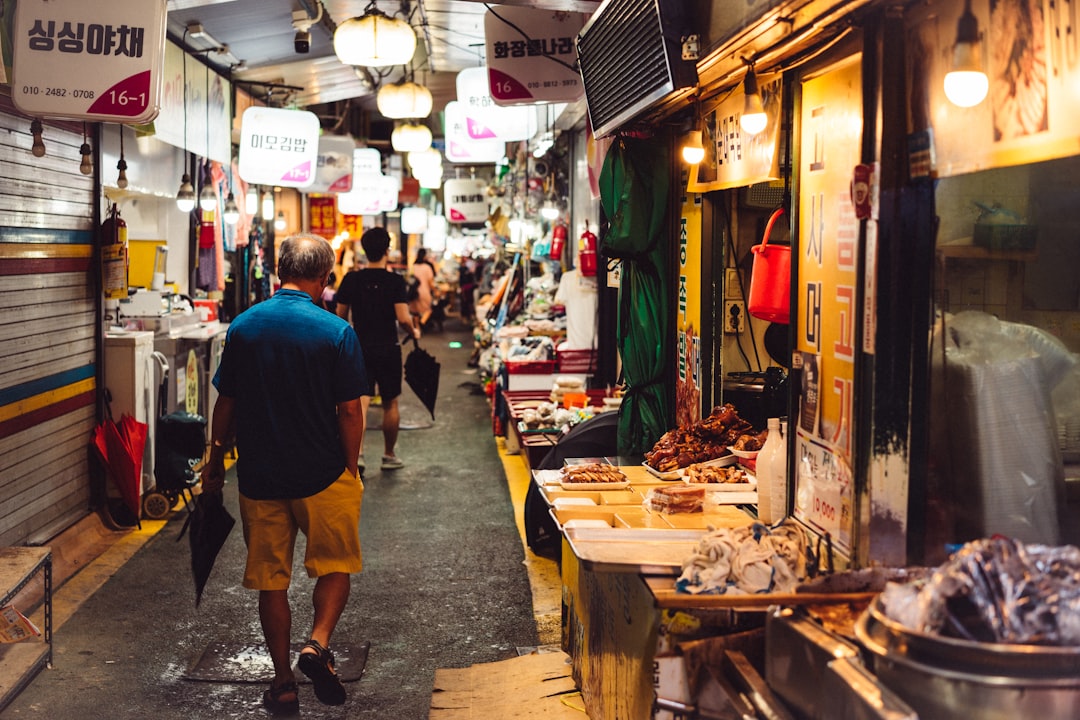
This is where locals actually shop. It’s in downtown Daejeon, about 10 minutes walk from Daejeon Station. Claustrophobic, loud, full of dried fish and random produce. Not Instagram-worthy, but if you want to see real Korean city life? This is it. No entry fee. Spend an hour wandering around. You’ll see stuff you didn’t know existed.
Where to Eat / Practical Tips
Tteokkochi (떡꼬치) — Jungang Market Area
There’s a small stall in the market alley selling rice cake skewers coated in gochujang and sesame seeds. Around 3,000-4,000 KRW per stick. It’s the kind of thing you don’t see much in Seoul anymore — pure comfort food, zero pretension. I genuinely crave this stuff.
Dimibak (디미박) — Yuseong Area
A proper restaurant near Yuseong Station serving dakgangjeung (steamed chicken with ginseng broth). Main dish runs 18,000 KRW. The portions are enormous. Go hungry. The broth has actual depth to it — not the watered-down version you get at tourist spots. This place has been there for 20 years and honestly doesn’t care if you’re a tourist or local.
Practical Eating Tips
Street food near the science museum area is your friend for lunch — kimbap, tteokbokki, hotteok. Usually 5,000-8,000 KRW. Download Naver Map or Kakao Map if you don’t have them already. Google Maps barely works here. Convenience stores (GS25, CU, Emart24) are everywhere for quick snacks and drinks. A bottle of decent Korean soju costs around 4,500 KRW.
Things Locals Know
Free wifi is decent in most cafes, but connection can be spotty in some areas. Hotels generally have reliable wifi. Most smaller restaurants don’t accept card payments — bring cash. ATMs are plentiful near the station. If you need pharmacy items, Omnichannel stores have everything and staff speak some English.
Honest Take
Daejeon works best if you’re coming from Seoul and want a genuinely different pace without traveling five hours. Skip it if you’re only in Korea for one week total — use your time in Seoul or Busan instead. The ideal visitor is someone who’s already seen the major Korean cities and wants something more authentic and less touristic. Come in fall (October-November) for the best weather — it’s not too hot or cold, and the museums are manageable crowd-wise. Winter is fine too if you don’t mind the cold. Honestly, the one thing I wish I’d known earlier: the KTX ride back to Seoul in the evening gets crowded with commuters. Book your return ticket before 2 PM if possible, or expect to stand for 50 minutes. Two days here is the right amount of time. Any longer and you’re looking for things to do that aren’t really there.